
Cracks in Commercial Real Estate Market Usher in All-Too-Familiar CMBS Putback Litigation and Risk of Broader Distress

It has been said that history repeats itself. This is perhaps not quite correct; it merely rhymes.

– Theodor Reik, 1965, Curiosities of the Self: Illusions We Have about Ourselves 

I am reminded frequently of the above quote when I look at the state of the commercial real estate (“CRE”) market today, and track the first of what will likely be many more repurchase or “putback” actions being filed in the commercial mortgage-backed securities (“CMBS”) space. Interestingly, the quote itself seems to exemplify its underlying messaging, as several thinkers have said similar things, and there is some controversy over its attribution. Namely, while this quote is often misattributed to Mark Twain, there is no record of him including it in any of his writings. Instead, it seems to have first appeared in a 1965 essay by Psychoanalyst Theodor Reik, where it was preceded by the prescient words, “There are recurring cycles, ups and downs, but the course of events is essentially the same, with small variations.” Twain, for his part, did say something similar, and even more colorful: “History never repeats itself, but the Kaleidoscopic combinations of the pictured present often seem to be constructed out of the broken fragments of antique legends.”

History never repeats itself, but the Kaleidoscopic combinations of the pictured present often seem to be constructed out of the broken fragments of antique legends.

– Mark Twain

Both quotes seem particularly appropriate at this moment, and their implications have prompted me to return to blogging after a years-long hiatus, during which the representation of clients in the structured finance and distressed investment space has taken precedence over continuing with The Subprime Shakeout. However, as I’ve seen an increasing number of red flags and signals of distress in the CMBS market (particularly involving office, retail, and lodging properties), it has compelled me to begin writing again and highlight the similarities in the market conditions that were fomenting in the residential mortgage-backed securities (“RMBS”) market in the run-up to the Global Financial Crisis (“GFC”) of 2007 and 2008.

Namely, in my structured finance practice at Perry Johnson Anderson Miller & Moskowitz (“PJAMM”), we are seeing many of the same “rhyming” indicators of the overextension of credit to the CRE market generally, along with revelations of potential systemic fraud and misrepresentations in the offering documents for financial products like CMBS that are backed by commercial real estate. Most prominently, allegations of widespread inflation of net operating income (“NOI”) figures provided at origination by borrowers across the CMBS market suggest that some of the same cavalier attitudes towards underwriting that infected the structured finance market for residential mortgages have now extended to commercial mortgages. And while such misrepresentations or omissions in the offering documents typically go unnoticed or unenforced during good times, once there is a downturn (or even just a leveling-out) in the market, losses typically follow, prompting investors to investigate breaches of representations and warranties as a basis for legal action to mitigate those losses. Indeed, as we’ll discuss later in this article, we are just beginning to see CMBS trustees and servicers filing mortgage repurchase or “putback” actions in the CMBS space that read very much like the wave of RMBS putback cases we predicted and then helped litigate and settle over the past 18 years.

Level Setting – CRE Market Context

This is the precipice at which I believe we stand today in the CRE and CMBS markets. Commercial lending and securitization of the resulting mortgages continued to expand throughout the late 2010s and early 2020s, with a peak CRE lending volume of $816 billion in 2022. The CRE market was thus slow to adjust to foundational changes in the commercial property space that began after the turn of the millennium (think online shopping and pressure on brick and mortar retailers), and accelerated with the outbreak of COVID-19 (with the normalization of online shopping, the rise of remote work, and the drop in utilization of office space). As interest rates rose rapidly during 2022 and the cost of debt increased—while NOI has fallen for many commercial properties— it has become progressively more difficult for borrowers to refinance commercial loans, particularly those structured with interest-only payments due during the life of the loan and balloon payments due at maturity (as are commonly utilized in the commercial property space).  

Counterintuitively, commercial loan origination spiked running up to and through the COVID pandemic (at a time when commercial property would have been particularly unprofitable, with revenues often unable to cover even interest payments on commercial loans), which bubble is putting additional pressure on the CRE market now. Given these conditions, it is only a matter of “when” and not “if” the pressure will ultimately lead to a severe downturn in the market and defaults in the commercial lending space.

Though delinquencies and defaults have certainly increased over the past couple of years, particularly in office space, we haven’t yet seen the “crash” that many folks keeping an eye on this market have predicted based on the CRE market downturn, the number of distressed loans, and the relatively high interest rates that would stand in the way of a smooth recalibration. Part of this stems from market participants’ willingness to engage in what is commonly known as “extend and pretend.” Essentially, when these short-term, often 5- or 10-year loans reach maturity, and the principal portion of the loan comes due, lenders and servicers have thus far been largely willing to work with borrowers on creative solutions whereby the maturity date of a severely delinquent or soon-to-be defaulted loan is kicked out 12- to 18-months, possibly with the infusion of some additional capital, an interest rate adjustment, and/or a deferred payment plan.

However, these creative solutions do not tend to resolve the underlying, structural problem, and instead become more akin to “kick the can down the road” measures. Barring a positive change to the market environment, the fundamental issue remains: many commercial properties are cash-flowing (and therefore are valued) far less than was expected at the time of origination and reaching maturity in an environment in which refinance options are limited.

While “extend and pretend” measures do allow property owners and investors to spread out potential defaults and avoid a credit crunch, giving them some measure of control over when and where the defaults, foreclosures, and/or legal actions should occur, they cannot continue forever. Indeed, while there was a spike in loans hitting maturity in 2025, there is another wall of looming maturities that will need to be worked out in 2026 and into 2027. Needless to say, some market institutions that predicted a relatively robust recovery last year are still waiting. As Deloitte put it in its recent 2026 CRE Outlook report, “[W]e anticipated that 2025 could mark a recovery for the global CRE industry … As we write a year later, it hasn’t exactly played out that way.”

We anticipated that 2025 could mark a recovery for the global CRE industry … As we write a year later, it hasn’t exactly played out that way.


 – Deloitte Center for Financial Services, 2026 Commercial Real Estate Outlook, September 29, 2025

The Rise of CMBS Repurchase Actions

Meanwhile, the CMBS putback actions have officially begun, signaling the limits of “extend and pretend.” In March 2025, Wells Fargo, as trustee of the J.P. Morgan Chase Commercial Mortgage Securities Trust 2019-MFP, filed suit against J.P. Morgan, as the seller on the deal, for breaches of loan-level representations and warranties. Wells Fargo v. JPMorgan II, Case No. 25cv1943 (SDNY, filed Mar. 10, 2025). The allegations in the complaint, if true, indicate the presence of rot in the foundation of the CRE market.

For instance, Wells Fargo alleges that JPMorgan knowingly and intentionally utilized fraudulent financial information as part of the subject loan’s underwriting, allegedly inflating the NOI on the underlying properties by 25%, and then sold bonds to investors based on the fraudulent figures. JPMorgan’s motion to dismiss Wells Fargo’s primary claim—breach of contract for failure to repurchase the underlying loan—is still pending before the Court, and relies heavily on whether the complaint adequately alleges JPMorgan had “actual knowledge” of the issue, as the representation and warranty Wells Fargo is alleging was breached is limited by a “knowledge qualifier” (requiring the loan seller to have actual knowledge of the breach at the time of subject loan’s origination for the representation to be actionable). Notwithstanding the pending motion to dismiss, fact discovery is well underway in the case and expert discovery is set to be completed by June of this year.

Already, discovery in that case has yielded some telling disclosures. During a dispute over Wells Fargo’s efforts to obtain documents from and depose Brian Baker, a key member of JPMorgan’s credit committee that Wells Fargo alleges directly knew about problems with the financial information submitted by the borrower (but approved the loan anyway), Wells Fargo submitted to the court internal JPMorgan communications revealing knowledge of systemic issues at one of the largest players in the CMBS space. In the instant message communication snapshotted below, Deborah Lipman, a member of the JPM credit committee, noted in May of 2019—less than a month before the subject loan was put before the JPM credit committee for final approval—that JPM, and others involved with the loan, were engaging in some of the same practices with CMBS that had led to the residential real estate crash of 2007 and 2008:  

Wells Fargo v. JPM II, Plaintiff’s Letter to the Court, Ex. 6 (Doc No. 81-6) at 2.

This statement highlights, not just that JPM apparently had concerns about its commercial mortgage lending and securitization processes with respect to this one at-issue loan prior to securitizing it, but that at least some decisionmakers at JPM appeared to have concerns about something much more widespread: that “we are doing 2007 all over again.” Indeed, if this abandonment of basic diligence is occurring at one of the largest commercial lenders in the United States, as has been alleged, it suggests these practices were and are likely quite widespread, as lending is historically subject to a race-to-the-bottom. Further bolstering that conclusion, JPMorgan has now alleged in its own letter to the court that SitusAMC, an affiliate of Situs Holdings, LLC (the special servicer who is bringing this repurchase case on behalf of Wells Fargo), assisted JPMorgan with its pre-closing due diligence on the subject loan and was aware of the allegedly inflated NOI and other issues with the borrower’s financial information itself! See Wells Fargo v. JPM II, Defendant’s Letter to the Court (Doc. No. 85) at 1. All of this suggests that these issues were not isolated, but rather were symptoms of more systemic problems in the commercial loan industry.

Right on cue, another CMBS repurchase action was filed earlier this month, styled Computershare Trust Company, as Trustee of the BBCMS 2023-C19 trust, v. Starwood Mortgage Capital, LLC, Case No. 26cv01695 (SDNY, filed Mar. 2, 2026). While still in its early stages, there are a couple of interesting points we can take away from the initial filings:

  1. We know the underlying loan-level representation and warranty breach is not based on fraudulent financial information, but rather on the condition of the underlying property, specifically a parking garage sitting beneath a mixed-use (office/retail) commercial space.
  2. The representation and warranty that is alleged to have been breached, as in Wells Fargo v. JPMorgan II, is limited by a knowledge qualifier.
  3. The loan seller here, Starwood, is an affiliate of the Chetrit Financial Group, and Chetrit is involved in Wells Fargo v. JPMorgan II, discussed directly above, as a defendant. The Chetrit Group has been the focus of mounting legal trouble over the past year-plus, and one of its founders, Meyer Chetrit, was just indicted (along with an indicted unarraigned co-defendant, and their companies, including The Chetrit Group) and charged with harassment of two rent-regulated tenants. (Note: All of this smoke is enough to suggest that if you are invested in any underperforming CMBS or commercial real estate assets (particularly any involving the Chetrit Group, or its affiliates), it would be worth investigating the circumstances and determining whether any action should be taken.)

Takeaways and Action Items

Mortgage repurchase actions in the commercial space show particular promise, as they can take advantage of the well-trodden ground and well-established case law that has formed through the flood of RMBS putback cases litigated over the past two decades, while also frequently featuring several advantages. For example, some CMBS deals allow certificateholders to initiate dispute resolution proceedings—including, potentially, more expedient arbitration and mediation processes—rather than requiring a minimum percentage of holders (usually 25%) to band together to direct and indemnify the CMBS trustee to take action. This suggests that for every putback dispute that has come to light due to the filing of litigation, there are likely many more disputes that are being, or already have been, resolved behind the scenes.

In addition, many CMBS deals are single-asset, single-borrower deals (so-called “SASB” deals), or feature only a small number of loans as collateral, making the reunderwriting process much more efficient and affordable than RMBS deals with thousands of loans to reunderwrite. But we’ve also learned from RMBS putback actions that statutes of limitations are short and unforgiving, and they run from the closing date of a deal, not from the date that breaches are discovered. Indeed, the RMBS investors who acted quickly in the wake of the crisis tended to be far more successful than those who waited, as statute of limitations defenses proved to be the primary (and sometimes only) defense to well-pled RMBS putback cases.

[We’ve] learned from RMBS putback actions that statutes of limitations are short and unforgiving, and they run from the closing date of a deal, not from the date that breaches are discovered. Indeed, the RMBS investors who acted quickly in the wake of the crisis tended to be far more successful than those who waited, as statute of limitations defenses proved to be the primary (and sometimes only) defense to well-pled RMBS putback cases.

It is not just the filing of these few repurchase actions that indicates a broader wave is coming, as research and analysis by my team PJAMM has revealed a number of concerning trends in the CRE space. Through the tracking of new filings in New York County, we are seeing an uptick in the type of debt collection and foreclosure matters that tend to foreshadow broader losses and repurchase actions in structured debt instruments. 

We are also tracking commercial lenders’ reporting of disputes over repurchase demand activity pursuant to SEC Rule 15Ga1, and have noted a gradual, but ever-growing increase in repurchase activity reporting over the last several quarters. Earlier this year, a commercial real estate lender brought an action in federal court against several affiliates of a well-known, national commercial real estate appraiser (mentioned sarcastically by Deborah Lipman in the same string of instant messages referenced above), as well as an individual appraiser, alleging defective appraisals of the commercial property backing the at-issue loan, which in turn improperly inflated the value of the commercial property (importantly, CRE appraisals take into account NOI in order to understand the value of any given commercial space). Meanwhile, CRE borrowers have begun to bring actions against CMBS trusts and special servicers claiming bad faith in the loan modification process when they became delinquent on their payments, including allegations that special servicers exploited this distress to extort fees that were contrary to the best interests of the borrower and the securitization vehicle.

While we’ve highlighted just a few examples here, the broader CMBS space is continuing to see an increase in key indicators of distress. These include signs of the fraud that typically results from an overheated market and then drives both its collapse and the strongest legal claims for recoveries, not just in individual cases like Wells Fargo v. JPM, but more broadly across the industry. Tellingly, in 2024, we saw the GSEs publish new guidelines in an attempt to keep fraudulent loans out of their pipelines amid rising delinquencies and fraud concerns, while in 2025, we saw revelations of fraud uncovered by Fannie Mae following a multiyear investigation into the CRE on its books. Given the GSEs’ critical role in finding a path to recovery after the RMBS crash, the exposing of fraud by Fannie and Freddie in the CRE and CMBS spaces should be carefully noted as a precursor of things to come. In sum, several data points serve as a harbinger that additional CRE distress and a new wave of CRE-related litigation is likely on the horizon.

Are these the “broken fragments of antique legends” that Twain was talking about in constructing the “Kaleidoscopic combinations of the pictured present,” or the rhyming of history referenced by Reik, signaling a potential CRE crisis along the lines of the GFC? Only time will tell, but certainly these various signs should not be ignored by anyone invested in commercial real estate (or considering making such an investment). In particular, rising delinquencies, defaults, or losses in CRE portfolios should not be assumed to be simply the inevitable product of a market downturn (or that they will be straightened out given enough time), but should be investigated as the potential consequence of misrepresentations at origination or offering that hid deeper problems. Otherwise, the default outcome will be that the investors left holding CRE derivatives—who typically relied on the deal parties who originated the loans and structured the deal to perform ordinary due diligence—will be saddled with the losses caused by the non-performing commercial real estate assets backing their investments, regardless of whether they were the product of misrepresentations or a market downturn. It is incumbent upon these investors (and insurers) to make sure, as The Who once sang, that “We don’t get fooled again”!

Author’s Note: Special thanks to Nathan van Loben Sels for his significant contributions to the research and writing of this post. With this post, I plan to begin blogging again on a semi-regular basis, expanding The Subprime Shakeout beyond the residential mortgage market to discuss issues in commercial and consumer lending. Stay tuned for future articles addressing the collapse of several consumer lenders in the subprime auto loan space. 
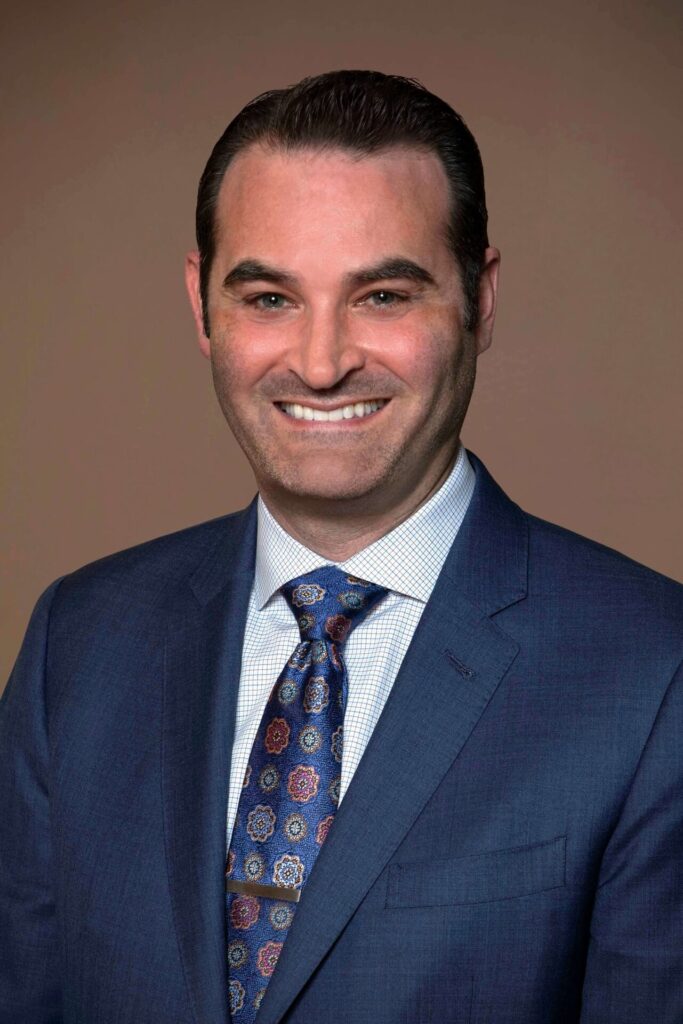

Isaac Gradman is a partner at Perry Johnson Anderson Miller & Moskowitz in Santa Rosa, California, where he specializes in structured finance litigation, investment fraud, and complex commercial and financial disputes.

Posted in allocation of loss, banks, bondholder actions, bondholders, borrower fraud, broader credit crisis, Certificateholders, Chetrit, CMBS, contract rights, CRE, Deloitte and Touche, Fannie Mae, fraud, Freddie Mac, interest rates, investors, JPMorgan, lawsuits, liabilities, litigation, MBS, misrespresentation, mortgage fraud, mortgage market, pre-investment due diligence, putbacks, re-underwriting, rep and warranty, repurchase, responsibility, securities, securitization, sellers and sponsors, servicers, statutes of limitations, The Subprime Shakeout, underwriting practices | Tagged , , , | Leave a comment

Who’s Watching the Watchmen? RMBS Trustees Come Under Fire as Investors Launch Next Wave of Lawsuits

“When one door closes, another door opens; but we so often look so long and regretfully upon the closed door, that we do not see the ones which open for us.”

Alexander Graham Bell

The face of RMBS litigation took a dramatic turn last month when the focus of aggrieved mortgage bondholders moved beyond seeking recompense from the large banks who packaged and sold defective mortgage loans, and began targeting the other large banks that were hired to protect investors from such wrongdoing.  On June 18, 2014, a large group of investors that includes BlackRock and PIMCO filed six largely identical lawsuits in New York State Supreme Court against the six most prominent mortgage bond Trustees: Bank of New York Mellon (“BNYM”), U.S. Bank (“USB”), Wells Fargo, Citibank, Deutsche Bank, and HSBC.  The lawsuits collectively target over 2,200 residential mortgage-backed securities Trusts with an aggregate original principal balance of over $2 trillion, and alleged losses of over $250 billion.  An exemplar complaint is available here.

With these salvos, the fallout zone from the Mortgage Crisis has officially expanded, leaving very few players untouched.  However, this development was not surprising – at least to this humble long-time observer of and participant in residential mortgage backed securities (“RMBS”) litigation.  I have been predicting since as far back as 2010 that the Trustees who ignored or stood in the way of investor efforts to mitigate their losses would eventually face a day of reckoning.  In early 2011, I laid out the choice facing RMBS Trustees – protect investors or face their wrath – in the context of an iconic protest song by Bob Dylan.  But never did this potentiality come into sharper focus than with the filing of these six massive lawsuits last month.  As us litigation geeks are fond of saying, a complaint is worth a thousand words.

Towards the end of this article, I will delve into what exactly is being alleged in these suits, and what this shift means for existing and future putback lawsuits and settlements, as well as for Trustees, issuers and originators trying to deal with the fallout from the lingering mushroom cloud of the Mortgage Crisis.  But to understand why we have only now seen a major effort in this regard, let’s examine the top 5 developments that brought us to this point.

No. 5 – ACE II Closes Door on Non-Tolled Investor Actions, At Least For Now

No conversation about Trustee suits can take place without first understanding the status of the underlying mortgage repurchase litigation by investors against the issuing and originating banks, and particularly the evolving case law on the statute of limitations for such claims.  In particular, the key development in this space is the decision handed down by New York’s First Department Appellate Court just before the close of 2013 in ACE Securities Corp. v. DB Structured Products, Inc., 112 A.D.3d 522 (1st Dep’t 2013) (“ACE II’).  Therein, the Court held that putback claims filed after the 6-year anniversary of the Closing Date of a particular RMBS Trust are time-barred.

So, what exactly did ACE II entail?  In a three-page opinion that was as short on reasoning as it was long on significance, the First Department reversed the well-reasoned holding by Supreme Court Justice Shirley Korneich and found that contractual rep and warranty claims (i.e., “putback claims”) on ACE 2006-SL2 were time barred.  In doing so, the Court held that the 6-year statute of limitations for putback claims began to run from the RMBS Trust’s Closing Date, when any breach of the seller’s representations and warranties purportedly occurred.  It also held that it was a condition precedent to enforcement of putback claims to provide the seller with contractually-specified notice periods for cure and repurchase, without explaining how the claims could accrue for statute of limitations purposes while a condition precedent remained unfulfilled.  Finally, it held that the Trustee’s later substitution into the case did not “relate back” to an earlier filing by Certificateholders, since those bondholders lacked standing to sue on their own, and therefore the claims were untimely.

There is no topic that generates more questions from my consulting and legal clients these days than the impact of ACE II on the future of RMBS litigation.  Consistently, I have answered that regardless of what I think of the merits of the opinion, so long as the First Department’s restrictive view of the statute of limitations for these claims remains the law of the land, RMBS Trustees will face liability for sitting on their hands and blowing these claims.

However, to the extent it’s not apparent from my description of the holding, let me make something perfectly clear: I disagree completely with the conclusions reached by the First Department in ACE II.  I believe the decision was guided more by pragmatic concerns over the flood of litigation that might result if Justice Kornreich’s opinion became the law of the land than by the well-settled principles of New York Law and the language of the contracts at issue.  This is evidenced by the dearth of any meaningful logical reasoning in the ACE II opinion, as well as by its internal inconsistencies.  For example, the First Department consistently refers to the contractual prerequisite to a repurchase claim of notice, opportunity to cure and demand for repurchase (the “Repurchase Protocol”) as a “condition precedent,” but then does not treat the Protocol as a condition precedent for purposes of the accrual of the repurchase claim (as the relevant authority dictates).

Instead, the Court holds that while filing a repurchase claim before complying with the Repurchase Protocol renders a repurchase claim a “nullity,” it also holds that the clock begins ticking on a repurchase claim before this Protocol has been fulfilled.  In other words, the claims in ACE II had been filed, according to the Court, both too early and too late.

No. 4 – Leave to Appeal ACE II is Granted

I am not the only one who feels that this decision was incorrect, and indeed, HSBC Bank USA (“HSBC”), the Trustee of ACE 2006-SL2, has decided to appeal ACE II all the way up to the Court of Appeals, the highest court in New York.  Though HSBC was not entitled to appeal ACE II as a matter of right, just last week the Court of Appeals granted such leave, while also granting motions from CXA-13 Corp. and the Association of Mortgage Investors to file amicus briefs in support of HSBC’s position.  Briefing on this appeal should now take place over the next few months, with oral argument likely to be scheduled a few months after briefing is complete.  This means that we are unlikely to see a decision on this appeal before the first quarter of 2015.

HSBC has also hired former U.S. Solicitor General and top appellate dog, Paul Clement, to head their appellate team, showing that they take this appeal very seriously.  In his first action as counsel of record, Clement participated in a motion to reargue, or in the alternative, to seek leave to appeal to the Court of Appeals.  Therein, he argued on behalf of HSBC that the First Department’s “brief fails to grapple” with existing New York precedent “in a meaningful way,” and “did not even address, let alone attempt to reconcile” its decision with other New York cases relating to continuing obligations.  Though the Court of Appeals may be inclined, as the First Department likely was, to restrict the flow of future putback litigation that is currently clogging its lower court dockets, they will certainly have a serious legal effort and strong arguments to contend with before doing so.

But this is not to say that the ACE II was a bolt from the blue.  To the contrary, I have been writing for years that this outcome was a possibility, and have been counseling clients that putback claims should be filed before the 6-year anniversary expires in the event that the courts find that the repurchase obligation was not a continuing one (such that it renews each time a party fails to repurchase a defective loan upon notice of same).  And certainly, the Trustees were aware, or should have been aware, that courts examining this relatively new question of law could go in either direction, and thus they should have filed any claims within six years in an abundance of caution.

Unfortunately, many Trustees dragged their heels, despite bondholders’ efforts to compel them to file claims before the 6-year anniversary.  Indeed, as the timing of many investor cases can attest – including ACE II itself – though investors believed that the statute of limitations should be a continuous one, they filed many of these cases in their own name on the eve of the six-year anniversary in an attempt to preserve their claims.  In many of these cases, the Trustees eventually substituted in as plaintiff (albeit after the six-year anniversary and, according to ACE II, too late), thereby acknowledging that the claims were valid and that the Trustee was the proper party to bring them.  Should ACE II survive, these cases will carry with them some of the strongest threats of liability against Trustees.

Certainly, the Court of Appeals may reverse ACE II, which would render much of this moot, so long as the Trustees then take up the mantel of now-timely putback litigation in earnest.  Note that even without a hard and fast time bar, it’s safe to say that bondholders would still have viable claims for damages against Trustees based on, among others, delays by the Trustees in enforcing their rights, the failure to monitor and enforce servicing obligations, and a failure to investigate or enforce a whole host of other practices by the various deal parties that ultimately cost the Trusts money.  However, in the absence of such a reversal, RMBS Trustees and investors alike must assume that this will be the law of the land going forward.  This means we are likely to see a flood of litigation against Trustees alleging that the banks sat on their hands and blew the statute of limitations on valuable putback claims.

No. 3 – Trustees Begin Facing Suits Even Before Statute of Limitations Issues Arise

A lot of folks have asked me if we can look to any precedents in assessing the recent complaints by BlackRock and PIMCO.  The short answer is yes, but only a few.  The law firm of Scott + Scott LLP filed three lawsuits in the Southern District of New York (Case Nos. 1:11-cv-05459, 1:11-cv-08066 and 1:12-cv-02865), in which they sued Trustees for failing to protect bondholder interests.  These cases were filed well before ACE II brought the statute of limitations into focus, and are framed as class actions rather than derivative actions.  Nevertheless, these suits have been largely successful thus far.

The suits are notable in part for their reliance on the Trust Indenture Act (“TIA”) to support some of their claims against the Trustee.  Under the TIA, indenture trustees are charged with certain minimum fiduciary duties, even in the absence of contractual language in the trust indenture itself.  In fact, while this Act was passed back in 1939, it was intended to address a similar situation as the one we’re faced with today – that investors in a bond structure are forced to rely on a trustee to protect their interests, but the trustee instead takes a passive role in reliance on the minimal language in the indenture.

In response, the trustees and certain amici from the banking industry began jumping up and down and hollering that the industry never intended the TIA to apply to RMBS Trusts, as those trusts were really more like equities than debt securities.  Thus far, two out of three judges in SDNY have rejected this argument in denying motions to dismiss on this theory, and the third ruling is currently being appealed before the Second Circuit.  This suggests that courts are willing to hold Trustees to at least minimum duties of loyalty and care in their oversight of RMBS trusts.

[Full disclosure: I have worked with Scott + Scott on certain aspects of these cases.]

In April 2014, we saw another effort by investors to hold RMBS Trustees accountable for breaching their contracts, common law duties and the Trust Indenture Act.  In Royal Park Investments v. U.S. Bank National Association, Case No. 14-CV-2590 (S.D.N.Y. 2014), bondholder Royal Park has purported to bring a class action on behalf of holders of bonds in over two dozen RMBS trusts against U.S. Bank.  Royal Park styles the Complaint as a “Class Action and Verified Derivative Complaint,” though the Court is likely to force Royal Park to choose one or the other structure for the litigation.  Though the suit is long-winded and a bit unfocused (here is the Complaint, for those who really want to get into the weeds, and it’s 221 pages long), it seeks over $6.7 billion in damages and contains extensive factual recitation regarding why U.S. Bank failed to live up to its obligations, and thus it must be taken seriously by the Trustee.

But these actions were only a prelude in size and scope of the massive actions we that were filed last month.

No. 2 – Major Investors File Sweeping Actions on Heels of ACE II; But End Game Remains Unclear

Though they never mention ACE II by name, the Complaints filed last month by BlackRock, PIMCO, et al. (collectively, the “Institutional Investors”) repeatedly suggest that by failing to act, the Trustee has lost the chance to do so, and the Trusts have been permanently damaged.  This is, I believe, what prompted these huge institutions to file their suits now.  In essence, the Complaints all allege that the Trustees were conflicted from the outset, in violation of their duty of independence (a.k.a. the duty of loyalty), and that this caused them to breach their contractual, statutory and common law duties to take action against the sponsors of the trusts and the servicers of the loans in the trusts.

I have had a unique view into the potential for claims against Trustees, as a major component of my practice is representing investors in dealings with Trustees, including many in which the Trustees and investors are potentially or actually adverse to one another.  Thus, I have seen firsthand the asymmetry in interests between Trustees and the bondholders they are generally charged with protecting.  But long before I was representing investors, I was writing about the struggles those investors were facing in compelling Trustees to protect their interests.

I wrote an article back in July 2010 about investors firing a warning shot across Trustee bows, and noting that Trustees may be sued for failing to live up to the fiduciary duties they acquire when they become aware of specific breaches by parties to the Trust Agreement.  In January 2011, I wrote about potential Trustee liabilities stemming from their duties to confirm that mortgages were properly transferred into the Trusts.  Later that month, I wrote an apropos article that laid out the choice with which Trustees were being presented – sue or be sued – and how certain Trustees were beginning to cooperate with investors.  Notably, I wrote that, “[t]he [active] trustees seem to be recognizing that while they were willing to drag their heels at first in the name of industry solidarity, this isn’t their battle, and they don’t want to find themselves on the hook for the errors and omissions of subprime lenders.”

Unfortunately, the deals in which Trustees ultimately took action were and remain the minority; and we are now seeing the consequences of this, as major institutions turn on the Trustees for burying their collective heads in the sand on the bulk of the subprime and Alt-A deals where defects ran rampant.

So, who is behind these massive suits, and what are their motives?  At the outset, it’s important to note that the Pooling and Servicing Agreements covering most RMBS Trusts provide the Trustee with rights to indemnity from the Seller or Sponsor against any costs or liabilities arising out of the Seller or Sponsor’s breach of its representations and warranties.  As such, the large RMBS issuers likely will continue to bear the brunt of the liabilities arising out of these latest lawsuits against the Trustees.  It is for this reason that the Institutional Investors’ filing of these six massive Complaints against all six major Trustees gives me pause.

Remember, the Institutional Investors behind these lawsuits are largely the same parties that were the architects of the $8.5 billion Countrywide settlement that I have repeatedly referred to as a “sweetheart deal” because of the size of the potential recoveries and the manner in which the investors and Trustee in that deal showed up to a gun fight with a water pistol.  [For background, see prior articles here, here, here and here.]  As the New York Supreme Court recently approved most parts of that settlement, these investors likely have been emboldened to cobble together similar pennies-on-the-dollar global settlements that threaten to put to bed all putback claims against JP Morgan and Citigroup, respectively.  I could devote an entire article to the similarities and differences between these various deals, but suffice it to say that while these last two settlements are procedurally on stronger footing than the Countrywide deal (giving Trustees the option to accept or reject the settlement on a deal-by-deal basis), they still amount to paltry payoffs compared to what could have been recovered.

Thus, when these latest Trustee cases were filed, my initial reaction was that these were similar efforts to place a cap on liabilities by engineering a global settlement, so that the Institutional Investors could keep their own investors, the large banks (their frequent business partners), and the Trustees (often affiliates of their business partners) happy.  The filing of the Complaints as derivative actions, meaning the plaintiffs are purporting to act on behalf of the entire Trusts to enforce (or settle) all potential claims the Trusts might have, only further suggests that the plaintiffs were setting up a global settlement that would cut off future suits.

And the countervailing fact that the Complaints were filed by respected plaintiff’s law firm Bernstein Litowitz, instead of Kathy Patrick’s Gibbs & Bruns, was not enough to convince me otherwise; it’s clear that Patrick was conflicted and would have had a hard time taking positions adverse to Trustees in any event.  That is, she just spent years in the Countrywide settlement proceedings arguing that BNYM, as Trustee, had acted reasonably, without conflict and above reproach, in an effort to see her settlement (and $85 million payday) approved.  It could potentially harm her efforts to see that settlement finally approved (it is still up on appeal, with oral argument coming sometime this fall) if she were to now file a complaint against BNYM claiming that the bank was actually operating under a massive conflict of interest.

Even so, the Institutional Investors have softened the conflict of interest language in the BNYM Complaint as compared to those of the other Trustees.  While the Plaintiffs allege in their claim for Breach of Fiduciary Duty of Independence (the Third Cause of Action) in the five non-BNYM lawsuits that the Trustees are “economically beholden to the sellers” because so much of their business comes from the sellers, Plaintiffs allege that BNYM is conflicted only because it “did not want to incur the associated transactional costs of exercising the Trusts’ rights against these entities or shine the light on its own wrongful conduct.”  It seems clear that with the New York Supreme Court’s approval of the $8.5 billion Countrywide settlement still subject to appeal, the investors are reluctant to take a position that could be used against them.  At a minimum, this raises questions about how aggressively the Institutional Investors will be pursuing these claims.

However, upon reading the Complaints themselves, I must allow for the possibility that these institutions may truly be seeking justice, or at least to maximize their recoveries, rather than placate the large banks.  The Complaints throw the book at the Trustees, bringing up all of the strongest arguments as to why Trustees had a duty to act, knew about problems in the Trusts, and failed to lift a finger.  They pull in literally thousands of Trusts, which increases the potential size of the claims, and have thrown around the $250 billion number as the potential damage figure, which would make it more difficult to settle for, say, another few billion dollars.

Yet, the aspect of these Complaints that, more than any other, forced me to consider that they were actually bona fide attempts at mitigating losses was not the Trusts and claims included in these Complaints, but the Trusts and claims that were not.  Namely, the six Complaints exclude potentially the strongest claims and the most powerful fact patterns by excluding any deals in which putback litigation has been initiated or significant putback activity has taken place.  That is, they have not sued the Trustees on deals like the one at issue in ACE II, where the investors seemed to take all the right steps to compel the Trustee to act, were forced to file on the day before the statute of limitations expired when the Trustee failed to act, and then had their case dismissed when the Trustee decided to step in only after the six-year anniversary had passed.  These situations present some of the strongest fact patterns for potential lawsuits against Trustees.

Similarly, in deals where active investors submitted repurchase claims through the Trustee to the responsible parties and obtained certain repurchases (but only a fraction of the claimed defective loans), and/or where the responsible parties filed Rule 15Ga-1 disclosures with the SEC regarding repurchase requests, investors also have potentially very strong cases against the Trustees.  There, they can argue that the Trustees were put on actual notice of widespread defects by way of the repurchase demands (and resulting repurchases, which validated those findings), but did nothing to enforce the bulk of the loans where lenders ignored their contractual repurchase obligations.  So, the Institutional Investors’ decision to exclude these deals suggests that they realize that those stronger claims don’t belong in their generic mass action that differentiates very little between deals.

At the same time, the lawsuits by the Institutional Investors also exclude the deals that are currently subject to the global settlements proposed for Countrywide/BofA, JP Morgan and Citigroup.  So, perhaps part of the impetus for these suits was to encourage the Trustees to accept the deals, by insinuating that so long as the Trustee accepts a settlement (even one that’s pennies on the dollar), it won’t face liability.  I think it’s safe to say that the jury’s still out on what is really motivating these suits, and what end game the plaintiffs’ are envisioning, but I think that RMBS Trustees, industry players and observers alike must allow for the possibility that while these Complaints suggest the plaintiffs mean business, the ultimate global settlement may reveal otherwise.

No. 1 – Additional Trustee Lawsuits Continue to Pour In, Suggesting Material Risk to Trustees

Since the Institutional Investors’ filing of their six massive lawsuits, we’ve seen at least four other Trustee suits filed over the last week.  On June 27, 2014, Commerce Bank and several other funds, credit unions, insurance companies and banks, filed a complaint against BNYM (Index No. 651967/2014, available here) requesting an accounting on 93 separate Countrywide RMBS Trusts, alleging that BNYM “engaged in a widespread failure to obtain and hold critical documents evidencing the mortgage loans belonging to the Trusts.”  It also seeks to preserve claims against BNYM for entering into the $8.5 billion settlement with BofA, to the extent the settlement is not finally approved.

On the same day, the Federal Home Loan Bank of Topeka, Doubleline Capital, and other funds filed three separate suits against HSBC, Wells Fargo, and Citibank, respectively (Case Nos. 651972/2014, 651973/2014, 651974/2014).  Though these cases are pre-RJI, and thus no Complaint is yet available, the Summonses with Notice indicate that these suits are for breach of contract, violations of the TIA, negligence and breach of fiduciary duty, on behalf of the plaintiffs and the trusts, based on the Trustees’ failure to take action to force Countrywide to repurchase loans sold to Trusts other than Countrywide-sponsored Trusts.  That is, the Summones allege that while BNYM took action as to the Countrywide-sponsored Trusts (which “constitute an attempt, however inadequate, to address defective mortgages in Countrywide trusts”), “[n]othing has been done by Defendant, or anyone else, to address the problem of defective mortgage loans in non-Countrywide trusts.”  The Summonses go on to detail some of the evidence that emerged from the BNYM Article 77 hearing, and seek redress on the remaining Countrywide loans for similar issues.

It’s safe to say that this is only the beginning of Trustee-focused litigation.  But, how do we get our arms around the real risk to Trustees?  As I mentioned, Trustees are indemnified to the extent that they can prove to a court that these losses arose out of breaches of reps and warranties by the issuing banks.  However, Trustees will likely have significant transactional costs in fighting these suits and establishing their indemnity claims against the large Wall St. banks.  In addition, Trustees do not have the right to be indemnified for their own gross negligence, bad faith, or willful misconduct.  In some deals, this exception also applies to plain old negligence.  Since such negligence is being alleged all over these latest complaints, there is some risk that the Trustees themselves will have to pay at least a portion of any judgment or settlement out of pocket.

And what is the size of that potential liability?  Well, the way I see these cases playing out is that they will be similar to an attorney malpractice case, where they will take the form of a “case within a case.”  That is, the plaintiffs will have to prove that the Trustee had a duty to act and didn’t, but also must prove the that underlying action would have had merit and have resulted in sizeable damages.  In theory, the Trustees (or their indemnitors) could be liable for the entire amount of damages that the unfiled putback claims could have recovered.  Also just in theory, but based on my experience in putback cases, that size could average 75-80% of the losses in these deals (so, for example, the damages in the Institutional Investor suits could approach $200 billion on the $250 billion in claimed losses, if all claims were successful) based on typical breach rates in deals of this vintage.

But, with BlackRock and PIMCO already having settled the Countrywide claims for approximately 8% or less of losses, they may be hard pressed to argue they would have recovered much more than that (or approximately $20 billion) through litigation/settlement.  This is yet another reason to be skeptical about the aggressiveness/representativeness of the Institutional Investor actions.  At the end of the day, much of that ultimate damage number is attributed to Trustee negligence or gross negligence depends on how much dirt the plaintiffs can uncover about what the Trustees knew or should have known, and what they did in response, and whether the factfinder is convinced that such conduct rises to the level of negligence or gross negligence.

Epilogue: Other Ramifications and Final Thoughts

In addition to the potential liabilities engendered by these six lawsuits themselves, the suits also put pressure on the Trustees to accept global deals that they’re currently evaluating on the JP Morgan and Citigroup deals, at least as to the deals that are not in active litigation or subject to an active direction letter from bondholders.  In those latter deals, the Trustees open themselves up to even greater liability if they were to settle claims where bondholders have been actively reviewing and/or putting back loans for the same price as claims where very little has been done.

The Trustees would also be biting off their noses to spite their faces, because in those deals, they’re already subject to a binding direction, and being provided indemnity by the bondholders, to pursue putbacks.  But for the remainder of the deals, the BlackRock/PIMCO lawsuits underscore the risks of doing nothing and passing on a deal that would settle the underlying putback claims.

Finally, these lawsuits demonstrate that there are potentially even greater liabilities (on a per-deal basis) awaiting Trustees who failed to act, or acted too late, on deals where active investors with the requisite holdings were putting back loans and/or attempting to direct the Trustees to take action.  As discussed above, these are the cases with the most compelling facts, and those about which the Trustees must be most wary as the tide begins to shift against them.

Posted in ACE, Alt-A, appeals, Bank of New York, Bank of New York Mellon, banks, Bernstein Litowitz, BlackRock, BofA, bondholders, Certificateholders, Citigroup, Commerce Bank, Countrywide, Credit Unions, DB Structured Products, Deutsche Bank, Doubleline Capital, Federal Home Loan Banks, fiduciary duties, global settlement, HSBC, Institutional Investors, investors, JPMorgan, Justice Kornreich, Kathy Patrick, lawsuits, liabilities, litigation, MBS, New York State Supreme Court, Paul Clement, PIMCO, pooling agreements, putbacks, repurchase, RMBS, SEC, servicers, settlements, statutes of limitations, subprime, TIA, Trustees, US Bank, Wall St., Wells Fargo | 7 Comments

Motion to Exclude Frey Testimony from Article 77 Raises Eyebrows, Questions About Role of BlackRock and PIMCO

The backyard brawl between the AIG-led objecting investors on one hand and Bank of New York Mellon (BNYM) and the investors supporting BofA’s $8.5 billion settlement on the other is about to get even messier.  As I last wrote on May 29, before the merits hearing on the Article 77 settlement began in New York Supreme Court, that AIG had subpoenaed the records and testimony of Bill Frey, a bondholder advocate that had been hired to develop evidence against Countrywide.  We had heard very little about that testimony until this past Friday, September 20, when BNYM and the supporting investors filed this motion to prohibit Frey from testifying.

The essence of the 2-page motion is that Frey’s testimony was both irrelevant and protected from disclosure by an NDA.  But both of these arguments may be subject to attack.

BNYM and the institutional investors that support the deal, including BlackRock and PIMCO (the “Institutional Investors”), argue that the only topic at issue in the Article 77 proceeding is whether the Trustee’s conduct in reaching and submitting this settlement was reasonable.  Since the Trustee never hired Frey or considered any of his work, nothing Frey would say could have any bearing on whether the Trustee’s actions were reasonable.

However, Frey’s testimony may reveal that the settlement was actually the product of a non-arms-length transaction, something that the Trustee should have investigated before swallowing the deal and its assumptions whole.  And I believe that this is why the Institutional Investors are afraid of what Frey will say on the stand.

As has long been rumored, and as Debtwire has previously reported, Frey had developed, on behalf of Tal Franklin’s much larger group of investors (a group that originally included BlackRock and PIMCO), a study of whether servicing practices by Countrywide had complied with its servicing obligations.  This study found that, in nearly every deal examined, Countywide had violated its servicing obligations in its treatment of first liens for which it or BofA held the associated second lien (i.e. self-dealing).  Multiple sources have told me that this study was actually verified by Fannie Mae, which confirmed that the methodology and results were accurate.

However, when it came time to submit this information to BNYM and demand that it take action, which would have created an Event of Default and heightened duties for BNYM, the Institutional Investors pulled out, submarining Franklin’s effort.  Instead, the Institutional Investors, led by attorney Kathy Patrick, opted to ignore this hard evidence, stay on friendly terms with BofA and BNYM, and negotiate the sweetheart deal (8 cents on the dollar of potential claims) that’s now at issue in the Article 77 proceeding.

When reached by telephone, Frey told me that he had “no comment” regarding the legal proceedings.  Frey’s attorney, Bob Knuts, and the attorneys for the objectors and the Institutional Investors did not return calls for comment.

While we don’t know exactly what Frey’s testimony would entail, or what his records would reveal, we can only imagine what juicy details would emerge regarding the way this deal came together.  From the lone internal email communication that has been released to the public thus far, we’ve already learned plenty.

Here is a copy of that email from Kathy Patrick to her group of Institutional Investors, informing them that participation in attorney Tal Franklin’s more aggressive effort to declare an Event of Default in a letter to the Trustee “is not in your interests.” [Note that this email was originally published by Reuters in connection with this story – the link remains but the content is now subscription-only, so I have posted it on Scribd.]  Patrick goes on to tell her group that “it would be a terrible shame to waste the traction we have gained with BONY by sending them a default letter at this critical stage.”

Patrick then notes that she believes that sending conflicting instructions to the Trustee would cause it to freeze in place and do nothing.  Tellingly, she concludes with the line, “[w]e don’t want to be forced to go to war with [BONY] if there is an opportunity to achieve victory by different means.”

The email initially came to light during the time that U.S. District Court Judge William Pauley had the case before him, and was considering whether to remand the proceeding back to state court.  Though Patrick was arguing before Judge Pauley that her clients were the only game in town and any amount they got was pure gravy, read this email and tell me you’re not left with the distinct impression that there was another, more serious game in town, and that her clients, instead of playing in the big leagues, opted to play patty-cake with the Trustee.

In short, Frey’s testimony and records could show that Kathy Patrick’s clients, like BlackRock and PIMCO, had purposefully ignored strong evidence at their disposal, and had negotiated a settlement that was better for BlackRock and PIMCO than it was for the pensioners and savers whose money they managed.  In other words, they never really intended to litigate these claims or push BofA for the best deal possible – instead, they may have had business reasons (including liquidity needs supplied by BofA and overlapping ownership with BofA) for wanting to keep BofA happy while looking like they were pursuing remedies.  Why else would the Institutional Investors provide a limited conflict waiver to BNYM attorney Mayer Brown, so that the Trustee’s counsel could only negotiate a settlement, and would not be permitted to litigate?

This raises perhaps the most important question to emerge from this trial – did these Institutional Investors breach their fiduciary duties to their own investors by agreeing to this deal?  This is a question that every union pension fund and college endowment that runs money through these institutions should be asking, whether or not this deal gets approved.  If these money managers gave away valuable claims for pennies on the dollar based on conflicts of interest, they should have to face the music.

Meanwhile, if Trustee had signs that the deal wasn’t truly arms-length, it shows that the Trustee may not have acted reasonably in accepting the deal.  Instead, it should have asked more questions about the process and how the numbers were reached, and certainly should have invited other stakeholders to participate in the conversations, before seeking the Court’s approval for the settlement, and pre-committing itself to use its “best efforts” to see that the deal was approved, no matter what evidence emerged.

At its heart, our legal system is adversarial in nature, and requires both sides to be pulling as hard as they can for the best result possible, so that the factfinder can find the middle ground.  If nobody was actually acting in an adversarial manner during the settlement negotiations, and if the settlement is then given a presumption of reasonableness in the Article 77 proceeding, it distorts this adversarial process.

As I wrote about recently, this proceeding is odd in that party that stands to lose the most (BofA) isn’t even a party to the proceeding, and the party pulling for the deal to be approved (BNYM) has no stake in the outcome, other than preserving the indemnity provided to it by BofA.  Thus, it makes for an awkward and distorted platform from which to render justice of any sort.  At the very least, Judge Kapnick would have to look more closely at the deal and the Trustee’s actions if it becomes clear that the deal was the product of conflicted self-dealing.

[As an aside, this also raises questions about Fannie Mae’s involvement and the reasonableness of its conduct.  If it’s true that Fannie had verified data that showed that Countrywide had engaged in widespread servicing defaults, why didn’t it (or the FHFA as conservator) pursue claims based on that data to recover funds for taxpayers?  Why would Fannie only be willing to go forward if BlackRock and PIMCO had joined?  Sure, there’s a strength in numbers argument, but Fannie’s holdings (as revealed through the FHFA lawsuit against Countywide) were sizeable enough for it to pursue significant claims on its own.  Did it lack the political cover to move forward with putback and breach of contract claims, and if so, was that a proper consideration when leaving taxpayer money on the table?]

In short, there are many reasons to think that Frey’s testimony would be relevant to Justice Kapnick’s evaluation of the merits of this Article 77 proceeding.  There is also grounds to believe that the NDA signed by Frey only covered certain aspects of his work, and only a limited time period.  One source, who asked not to be identified, told me that much of Frey’s work and communications with investors took place before any NDA was in place.

All of this raises interesting questions about where this proceeding is heading and what Justice Kapnick will do.  She has stated on the record that she wants objectors to wrap up their case by this Wednesday.  However, she’s also indicated that she may set aside time in Novermber for closing arguments.

This motion throws a wrench in the Justice’s original time frame for wrapping up the hearing.  She must first review briefing and hear oral argument on whether Frey’s testimony should come in.  Then, if she rules that it can, the parties will have to review any documents he intends to produce, and will likely have a fight over which of his communications and other documents are protected or subject to privilege.  Evaluating all of this will take time, and Kapnick is unlikely to exclude potentially relevant evidence based simply on an arbitrary deadline.  Doing so would provide AIG and the other objectors with ample grounds for appeal.

Call me an idealist, but I believe in the American system of justice and the rule of law.  But the system only works if the aggrieved parties actually present their claims.

Here, few can dispute that the aggrieved parties are the pensioners, retirees and savers of the world who were duped into buying mortgage backed securities that didn’t live up to their promises – not even close.  The problem is that there are too many layers of imperfect principal-agent relationships between the aggrieved parties and the responsible parties, to achieve widespread justice.

The savers invest in various BlackRock or PIMCO fixed income funds, for example.  Most of these savers have no idea what those funds actually bought or currently hold.  BlackRock and PIMCO then have a fiduciary duty to manage those funds to get the best returns possible for their investors.  But if things go horribly wrong, they often lack the incentives to stick their necks out and file lawsuits.  Instead, they opt to stay with the pack, preserve their business relationships, and not rock the boat.

Even when certain bold investors decide to press their claims, they must go through passive Trustees, who want to do everything in their power to avoid getting sued, and conflicted servicers, who act to protect their own portfolios rather than acting in the best interests of bondholders.  Only if those bondholders can compel the Trustee and the servicer to act in their interests can they then take advantage of the justice system and the rule of law to see their contracts enforced against the Countrywides, EMCs and GreenPoints of the world.

As you can see, there are many steps along the way in which the incentives to press these claims can be distorted, and the agents do not always act in the best interests of their principals.  This Article 77 proceeding is the product of several of these distortions.  And while it’s not obvious at first to the untrained eye, which only sees that investors managed to squeeze $8.5 billion out of BofA, the more accustomed one gets to the way this deal came together, the more evident it becomes that the process was far from legitimate.

Should Bill Frey’s testimony be allowed in, as I think it should, it will help Justice Kapnick come around to that view, making it incrementally more likely that she’ll reject the deal.  But whether or not the deal goes through, it’s beginning to look more and more obvious that many of the proponents of the deal (and not just BofA) should wind up having to defend themselves in court when all is said and done against claims of breach of fiduciary duty, negligence, and breach of contract.  Should enough aggrieved parties be willing to press such claims, I’d be willing to bet that some form of justice will ultimately prevail.

Posted in AIG, allocation of loss, appeals, Bank of New York, banks, bench trials, BlackRock, BofA, bondholder actions, conflicts of interest, contract rights, Countrywide, demand letter, Event of Default, Fannie Mae, FHFA, fiduciary duties, global settlement, incentives, Investor Syndicate, investors, Judge Barbara Kapnick, Judge William Pauley, Judicial Opinions, Kathy Patrick, lawsuits, liabilities, litigation, MBS, negligence and recklessness, PIMCO, private label MBS, putbacks, remand, rep and warranty, repurchase, responsibility, RMBS, servicers, Trustees, William Frey | Leave a comment

Objectors’ Siren Song Enchants During Article 77 Proceeding

We are 20 days into the monumental bench trial over Bank of America’s proposed $8.5 billion settlement of Countrywide MBS claims, and with the proceedings now taking a break until September 9, we have a chance to sit back and evaluate what we’ve seen thus far.  When I do, I can honestly say that I’ve never seen a plaintiff take such a pounding during the presentation of its own case.  But, of course, this Article 77 proceeding is no ordinary case, and Bank of New York Mellon (BNYM) is no ordinary plaintiff.

As Trustee of all 530 Countrywide MBS Trusts at issue, and by virtue of having brought this odd proceeding before Justice Barbara Kapnick in New York Supreme Court, BNYM’s role is to ask the Court to bless Bank of America’s (BofA) settlement and the conduct of the Trustee as reasonable and beyond reproach.  The odd thing is that BofA – the party with the most at stake – isn’t even a party to this proceeding.  Instead, BNYM – which derives no economic benefit from the settlement dollars themselves – is serving as BofA’s foil – arguing for the settlement to be approved, while absorbing any attacks levied by the opponents to the settlement.

Even stranger, it has now become clear that the Trustee pre-committed itself to advocating for the approval of the settlement, regardless of what evidence or arguments the settlement’s opponents might present.  Much like the famous story from Homer’s The Odyssey in which Odysseus ties himself to the mast of his ship to avoid being persuaded off course by the enchanting sirens, BNYM has agreed to tie its own hands and bind itself to BofA’s chosen course for resolving Countrywide’s potentially massive mortgage liabilities.  The key question that Justice Kapnick and observers must ask is: was this an appropriate action for BNYM to have taken in this situation?

To see why this is so critical, let’s examine an exchange between counsel for BNYM, BofA, and the settlement objectors outside of the courtroom prior to this month’s proceedings (h/t Manal Mehta).  During trial on June 14, 2013, Justice Kapnick requested that the parties consider agreeing to mediation as a method of resolving the objectors’ complaints.  Following this request, two of the most prominent members of the objector Steering Committee – AIG and three of the Federal Home Loan Banks – sent a letter to counsel for BNYM confirming that the Steering Committee believed that mediation was appropriate and requesting that BNYM as Trustee “commence settlement negotiations immediately.”  It based this request, not on any direction by the objecting holders, but based on the Trustee’s “fiduciary duty of loyalty, which mandates that the Trustee act in the best interests of all certificateholders and avoid conflicts of interest.”

In response, Matt Ingber, counsel for BNYM, sent a letter to the Steering Committee and counsel for BofA, which attached the Steering Committee’s request for mediation.  Therein, he noted that “of course, a mediation cannot proceed without the participation of Bank of America and Countrywide.  Accordingly, please let us know the position of Bank of America and Countrywide on the request for mediation.”  This suggested that the Trustee was potentially open to negotiating with the objectors, but wasn’t going to take action without getting the approval of the bank behind the curtain.

Not wanting to keep anyone in suspense, BofA shot back with a response that was as clear as it was pithy.  Elaine Golin, BofA’s counsel from Wachtell Lipton, wrote, “Bank of America and Countrywide will not participate in the mediation that Objectors have proposed and will not otherwise engage in any renegotiation of the Settlement.  The Settlement Agreement reflects the result of lengthy, hard and arms-length negotiation.  It does not permit any of the economic terms to be renegotiated.”

BofA might have stopped there.  BNYM had already stated that the mediation could not proceed without BofA, so BofA’s refusal to participate should have ended the matter.  But, just in case anyone was in doubt about who was running this show, BofA decided to throw its weight around and smack the Trustee back into place.  Golin wrote to BNYM, “[w]e remind you of the Trustee’s obligations under Paragraph 2(a) of the Settlement Agreement to use its ‘reasonable best efforts to obtain Final Court Approval’ and under Paragraph 30 to use its ‘reasonable best efforts and cooperate in good faith to fully effectuate the intent, terms, and conditions of th[e] Settlement Agreement and the Settlement.’”  In other words, if you want us to continue to indemnify you and cover your expenses, don’t even think about questioning or renegotiating any aspect of this settlement.

Now, here’s the problem for BNYM.  It has an obligation to act in the best interests of the Certificateholders in each of the 530 Trusts at issue.  Yet, it negotiated a settlement that released the claims of all Certificateholders, without consulting the majority of those holders.

BNYM’s argument is that it independently evaluated the settlement and concluded that it was sound.  It has maintained throughout this Article 77 proceeding that it was perfectly reasonable for the Trustee not to consult with any Certificateholders outside of the 22 institutional investors who supported the deal.  Instead, it has argued that the Article 77 proceeding itself was Certificateholders’ opportunity to say their piece and speak out against the settlement.

Yet, this argument rings hollow when juxtaposed with the “best efforts clause.”  In fact, the Trustee has acted consistently with the “best efforts clause” by opposing the objectors’ requests for expanded discovery at every turn.  If this proceeding was the full and fair vetting of the settlement that the Trustee held it out to be, why wouldn’t it want all relevant facts to come to light, such as the actual breach rate in the loan pools at issue?  Wouldn’t this allow all Certificateholders to make a fully-informed decision about whether to support the settlement?

More importantly, what good is this opportunity for the objectors to speak out against the settlement if the Trustee isn’t listening?  Or, more appropriately in the context of the Odyssean metaphor, the Trustee may be listening to the objectors’ siren song, but it can’t change course because it’s tied to the mast of BofA’s settlement vessel.  If the Trustee has an obligation to act in Certificateholders’ best interests, why shouldn’t it be allowed to revisit the settlement if new evidence emerges?  And why should the Trustee work to prevent relevant evidence from seeing the light of day?

The counterargument is that the objectors have their opportunity to present their case to Justice Kapnick, and it’s ultimately the Court that will make the decision.  But, it’s becoming increasingly apparent that the Justice will make this determination based not on the absolute dollar amount of the settlement, but on whether the Trustee’s conduct in negotiating and accepting the settlement was reasonable.

Thus far, objectors’ counsel, led by Dan Reilly, Larry Pozner and Mike Rollin of Reilly Pozner and Beth Kaswan of Scott & Scott, have seized on this conflict to inflict significant damage during cross examination of the Trustee.  They have repeatedly pointed out the internal conflicts that imperiled BNYM as it helped to piece together one of the largest settlements in history between BofA and 22 investors willing to make a deal.  In one of the most compelling moments, during the hearing on July 16, the objectors forced BNYM’s counsel to admit that even if he had learned of facts or law that undermined the settlement, he was contractually prohibited from informing the Court of this (unless it involved intentional wrongdoing by BofA) due to the “best efforts” and related clauses of the settlement agreement.  This seems starkly at odds with the Trustee’s duties under the governing trust agreements.

Indeed, as Trustee of the 530 Countrywide MBS Trusts, BNYM had an obligation to remain loyal to the Certificateholders in those Trusts and avoid conflicts in carrying out that duty.  However, as I’ve often pointed out and the objectors have argued, the realities were that BNYM wanted to keep BofA happy, as BofA supplied it with over 60% of its MBS Trustee business and promised to indemnify it from any liability if the settlement went through.  So, instead of wanting to push for the best deal possible, it simply wanted to see this sweetheart deal get done.

Of course, BofA didn’t trust that these nebulous economic interests would keep BNYM in line.  So it forced the Trustee to swear off objectivity, and agree to use its “best efforts” to get BofA’s settlement approved.  This means that BNYM, the party ostensibly advocating for the settlement, really doesn’t have a dog in this fight, other than a fear that BofA will get really angry and yank their business and/or their indemnity.

The objectors’ arguments about BNYM’s strange conduct and awkward position seem to have finally caught the ear of Justice Kapnick.  She ruled just before trial that objectors had made out a colorable claim of self-dealing and conflicted conduct by BNYM, sufficient to overcome the attorney-client privilege and allow the objectors to obtain emails that traveled between BNYM and its counsel during settlement negotiations.  Armed with these documents, the objectors subjected BNYM’s counsel, Jason Kravitt of Mayer Brown, to withering cross examination during six straight days of testimony at trial that would have worn down even the most grizzled expert witness.  And Kravitt is not a grizzled expert witness – he’s far more accustomed to being the one in the board room or on the other side of the witness stand.  [For a great blow-by-blow of the various lines of questioning, the best resource (aside from the transcripts themselves) is Mark Palmer’s daily coverage of the trial at the BTIG Blog.  Palmer reported that when Kravitt learned he was going to be called back to the stand for a sixth day, he dropped his head into his hands for about ten seconds).

As I look at this trial from a 30,000-foot perspective, I’m struck by how appropriate the Odyssean metaphor really is for this strange position that BNYM finds itself in.  By agreeing to the “best efforts clause,” BNYM has agreed to do everything in its power to support the settlement and see it get approved, regardless of what this trial may unearth about the reasonableness of the deal.  For those who slept through their Classics or Mythology classes in school, a brief refresher: Odysseus was the captain of his ship, and yet asked his crew to tie him to the mast when they sailed past the beautiful sirens, so that he would not be persuaded by their alluring call and plunge his ship into the rocks like so many had before him.  His crew was ordered to place wax in their ears so that they could not hear the call of the sirens or the entreaties of their captain.  But Odysseus had no wax in his ears, so he could still hear the sirens’ song; he just had no power to do anything about it.

It’s the classic allegory of pre-commitment – binding yourself ahead of time to what you know is the right course because you don’t think you’ll have the strength to choose that path in the moment.  It’s like the friend who gives you cash before you walk into a casino and tells you not to give it to him, no matter how much he protests.  [Never agree to this, by the way.  You’ll find yourself out in the parking lot two hours later as your friend yells at you to give him his money back.]

Only here, BNYM, as the plaintiff and the “captain” of the Article 77 ship, has a fiduciary obligation to act in the best interests of all bondholders, which include those they’re treating as the sirens –  the objectors.  And it’s not so clear that BofA’s path is the right one for the Certificateholders as a whole.

At least one of the objectors, AIG, has stated publicly that it holds an interest in 97 of the 530 trusts at issue.  Should the Trustee be permitted to pre-commit itself to a settlement without speaking to investors like AIG, before all the facts have been examined, and before the settlement has been finalized?  What if instead of steering the Trustee into the rocks, these objectors are showing the Trustee how it can reach friendlier shores (Ithaca?) – that is, squeeze a whole lot more money out of BofA?  Wouldn’t the Trustee have a duty to pursue this path and see where it leads?

BNYM’s expert JH Langbein thought so, but after he said in deposition that the Trustee owed a fiduciary duty to bondholders to maximize their recoveries, BNYM pulled him from their witness list.  Now, we won’t hear from him personally at trial, though AIG’s counsel read his deposition testimony into the record.  Same goes for Brian Lin, the now infamous expert from RRMS, whose calculations form the primary basis for BNYM’s determination that the $8.5 billion settlement amount was reasonable.  Lin’s no longer on BNYM’s expert list, but you can be sure that the objectors will call him to the stand as one of their witnesses.

Even without these witnesses showing up to discuss or defend their analyses, the objectors have scored plenty of points and brought many compelling facts to light.  First, they established through Kravitt that the “best efforts clause” could be read to amend the Pooling and Servicing Agreements, the contracts governing the 530 Trusts.  Yet, the Trustee did not follow the protocol established in those documents for amending their terms, which generally require a super-majority of Certificateholder votes.  So, agreeing to this clause may have been an improper amendment of the Trustee’s duties.

Second, they got Kravitt to admit that his firm, Mayer Brown, had no authority to actually sue BofA if settlement negotiations fell through.  That’s because Mayer Brown had also represented BofA, and had only obtained a limited conflict waiver from BofA to negotiate the settlement, not to sue.  At least ten of the institutional investors supporting the deal also had prior relationships with Mayer Brown, and they had all executed similar conflict letters.  This completely undermines BNYM’s position that these were arms-length negotiations and that it took an aggressive approach toward BofA, including an implicit threat of litigation.  If this was true, wouldn’t BNYM have hired a counsel that could hold the sword of litigation over BofA’s head?

Third, the objectors established that BofA was paying BNYM’s legal expenses throughout much of the negotiations and the Article 77 proceeding.  Though Kravitt contended that this was perfectly normal, I have yet to engage in negotiations with a responsible party over RMBS liabilities in which the party we were threatening to sue agreed to pay my legal fees.  I’d like to ask for that at the outset of my next negotiation and see how that goes over.

Fourth, the objectors established that the settlement treats all 530 Trusts alike despite the fact that they have differing legal rights (most importantly, with respect to certain breaches being deemed material and adverse in certain Trusts).  BNYM had not disclosed this to the Court previously, but it has now come out during the trial.  This flies in the face of BNYM’s duty to act, not as the Trustee of all 530 Trusts at once, but as the independent Trustee of each of those Trusts, bound to make a separate determination for each as to what’s in the best interests of that Trust’s bondholders.

When this proceeding resumes on September 9, BNYM will present the last two of its witnesses.  With the bulk of its case now having been presented, you would expect the Trustee to have built up a sizeable lead, since the objectors have still not put on a single of its own witnesses or experts.  And yet, if the Trustee has any lead at all, it’s a small one, and it’s only by virtue of the high standard that objectors must meet to get the Court to reject the Trustee’s Petition (as discussed previously, the standard for approval is simply reasonableness, so the objectors must show the Trustee acted irrationally or arbitrarily for the Petition to be rejected).  Though I still feel it’s unlikely that Justice Kapnick will reject the settlement entirely, it’s beginning to look increasingly likely that she forces the parties back to the negotiating table.

You see, one can only deny the facts so long.  And no matter how much BofA hammers on BNYM that it must abide by the “best efforts” clause, at some point, Justice Kapnick herself may start to become persuaded by the objectors’ siren song, and begin to see this settlement for what it is: a sweetheart deal designed to protect BofA from far greater potential liabilities.  At that point, this trial may shift decidedly in favor of the objectors.  And rather than risk having the Court reject the whole thing, send everyone back to square one and erase the indemnity the Trustee covets so badly, BNYM may decide it’s obligated to mediate with the objectors and see what it would take to have them drop their objections.  Though this might send BofA’s $8.5 billion settlement crashing into the rocks, it would also be just what AIG and the other objectors have wanted from the start: to be heard by a Trustee with the incentive and the ability to heed their calls.

[I will be on vacation the remainder of this week, and will respond to any questions or comments as soon as I can upon my return – IMG]

Posted in AIG, Bank of New York, bench trials, BofA, bondholder actions, conflicts of interest, contract rights, Countrywide, damages, discovery, Federal Home Loan Banks, fiduciary duties, global settlement, incentives, investors, Judge Barbara Kapnick, Kathy Patrick, lawsuits, liabilities, litigation, loan files, MBS, pooling agreements, private label MBS, putbacks, re-underwriting, rep and warranty, RMBS, securities, settlements, successor liability, Trustees, waiver of rights to sue | 3 Comments

BREAKING NEWS: Article 77 Hearing Postponed, Bill Frey Subpoenaed by AIG

I wanted to publish a quick update to yesterday’s article breaking down the challenges BofA will face to its $8.5 billion mortgage rep and warranty settlement.  Sources have informed me that the May 30 Merits Hearing for this settlement proceeding has, in fact, been postponed, with new date yet to be determined (likely several months hence).  There has of yet been no formal announcement on this, other than word-of-mouth from the court clerk.  However, my guess is that it has something to do with the the Intervenors’ Notice of Appeal regarding Judge Kapnick’s decision to strike Intervenors’ demand for a jury trial (h/t Manal Mehta).

In other breaking news, Bill Frey has been subpoenaed by AIG. I can only speculate that he will be asked about the circumstances that led Kathy Patrick to split off from the Investor Syndicate and encourage her clients to take a less confrontational approach to Bank of New York Mellon (BNYM) and BofA.

It has long been rumored that Frey developed specific evidence for the Investor Syndicate, which had been verified by Fannie Mae, of thousands of loan defaults in hundreds of Countrywide trusts.  If true, this would severely undermine one of the Institutional Investors’ main arguments supporting the settlement: that they were the only group that was taking action against Countrywide and that they were serious about recouping their constituents’ losses.

Since many of Kathy Patrick’s group of institutional investors were previously part of Tal Franklin’s larger Investor Syndicate, why did they fail to cite any of the specific evidence of default, which they must have known existed, in their letter to BNYM?  Instead, Patrick circulated an email, that has since been brought to light in these settlement proceedings, encouraging her clients not to put BNYM in default as it would “set back significantly the progress we have made to get to get BONY to consider an alternative rep and warranty strategy.”  This alternative strategy became the sweetheart deal for BofA that BNYM is now asking the court to bless in the Article 77 proceeding.

Posted in appeals, BofA, Event of Default, global settlement, Investor Syndicate, Judge Barbara Kapnick, jury trials, Kathy Patrick, specificity, William Frey | Leave a comment

The Bell Tolls for BofA

Memorial Day Weekend is always cause for some reflection, but as we draw closer to the May 30, 2013 merits hearing on Bank of America’s (BofA) proposed $8.5 billion settlement of Countrywide mortgage liabilities, this last one seemed particularly appropriate for reflecting on the battles that have come to pass since Bank of New York Mellon (BNYM) first proposed the settlement on BofA’s behalf back in June 2011.  Though there has been some speculation that a recent win for settlement objectors would delay the merits hearing in BofA’s legacy mortgage D-Day, the lawyers on both sides must prepare as if they’re going to war on Thursday.

The odds have certainly been stacked against the investors who object to this settlement (the “Steering Committee”), as the accord is being presented for approval in New York’s commercial division under Article 77, an obscure vehicle designed to obtain rapid approval for trustees who are performing administrative actions for trusts.  Is BNYM’s decision to release  over $100 billion of mortgage backed securities (MBS) contract claims across 530 different Trusts in exchange for $8.5 billion a reasonable administrative action for trustee?  That’s for Judge Barbara Kapnick to decide.

But she need not make this decision in a vacuum.  Many guiding decisions have been handed down in the most prominent MBS cases over the last few months, and most of them point to flaws in the assumptions made by BNYM in deciding whether this was a good deal for the investors whose trusts it represents.

Earlier this month, MBIA announced that it had finally settled its long-running battle royale with Countrywide and BofA, resulting in a payment to MBIA of over $1.7 billion in cash plus various additional consideration, bringing the total settlement value to somewhere north of $2.7 billion.  This announcement was both vindicating and bittersweet for me; while I had long been predicting a settlement along these lines (see, e.g., here and much earlier, here), MBIA had achieved so many victories in the meantime that I was starting to look forward to seeing BofA get hammered at trial for refusing to acknowledge these liabilities.

And indeed, while BofA saved itself from near-certain disaster by preventing this case from proceeding to trial, it may have waited too long to avoid serious damage to BNYM’s $8.5 settlement of mortgage repurchase or “putback” claims, the centerpiece of its legacy mortgage strategy.

Today, I will looking back on recent events, including evaluating the read-through from the MBIA settlement, but I will also be looking forward to the upcoming merits hearing on the Article 77 proceeding and the challenges BofA and other banks will be facing in putting legacy mortgage issues behind them.  And the more I look at these recent developments, the more I can hear foreboding bells tolling for BofA and the largest issuers of MBS.

In fact, “For Whom the Bell Tolls,” in all of its embodiments, appears to be the perfect theme for this analysis. My younger readers will probably associate this reference with the heavy metal classic from Metallica, which opens with the ominous tolling of bells followed by the driving guitar riffs that suggest the end is coming soon. So I will begin there, as when I consider the predicament of the Big Four Banks, I can’t help but hear the final lines of this song, suggesting that the reality of legal liability cannot be denied forever:

Now they will see what will be
Blinded eyes to see
For whom the bell tolls
Time marches on

Where do Investors Stand?

With MBIA’s multifaceted litigation against BofA now coming to a close, it’s clear to me that we are entering the most critical period yet in the war over who will bear the losses from the country’s pre-crisis credit binge.  The settlement between MBIA and BofA can only be read, as the markets did, as a win for MBIA and monoline insurers in similar positions.  But I also view it as validation for the position that commentators such as myself have been espousing for nearly five years now – that banks are on the hook for billions in bad loans based on faulty underwriting.  Yet, while bond insurers such as MBIA, AGO and Syncora have been overwhelmingly successful in their MBS litigation, and have now settled most of their outstanding disputes on favorable terms, investors have yet to obtain similar results.

As we’ve discussed at length on this blog, this difference stems from a variety of factors, including less robust contractual rights, standing issues, and lack of organization.  However, certain motivated investors have now banded together with like-minded investors to form critical mass, overcome standing issues by wrangling MBS Trustees into acting on their behalf, and compelled those Trustees to institute litigation.  These plaintiffs are now poised to follow the roadmap laid down by the monolines and recoup a significant portion of the Trust’s losses.  That is, of course, unless the largest banks pull off the equivalent of a legal Hail Mary

As my readers are well aware, I have viewed the Article 77 proceeding from the beginning as exactly that – a desperate and aggressive move by an institution with its back against the wall.  Further, as many observers still don’t seem to realize, this was not a typical arms-length settlement between adverse parties.  Instead, this was a sweetheart deal struck between BofA and a small number of conflicted institutions who desired to keep BofA happy and look like they were taking meaningful action, rather than squeezing all they could out of the nation’s former No. 1 bank.

Today, we find the settlement proceeding rapidly approaching an approval hearing before Judge Barbara Kapnick in New York State Court, scheduled for May 30. Battle lines have been drawn between the institutional investors that support the deal, BNYM as the trustee, and BofA/Countrywide on the one hand; and on the other hand the steering committee of institutional investors who oppose the deal, comprised primarily of AIG, Triaxx, and a three of the Federal Home Loan Banks  (up until recently, at least on paper, it included the attorneys general of New York and Delaware; however, these entities turned out to be paper tigers once they were allowed to intervene, saying little in court and doing less, making their exit from the Steering Committee less important than widely thought).

Central to the outcome of the case is the determination of whether BNYM’s decision to settle over $100 billion of potential liabilities for just $8.5 billion was reasonable.  Much is at stake for both sides, as Bank of America’s current loss reserves rest on the assumption that this deal will be approved, and other banks are beginning to use this settlement to estimate their own MBS liabilities.

As far as Hail Mary plays go, this play was drawn up rather well – file an action in a favorable court using a favorable, but obscure, legal vehicle with little precedent regarding its application; have the Trustee file the suit so it appears to be acting on behalf of all investors; and then cross your fingers and hope the judge doesn’t have the gall or the depth of understanding to reject one of the largest settlements (by gross dollar amount) in history.

The problem, of course, is that this is a sweetheart deal parading as an arms-length transaction, and its justifications are illusory.  And, like any illusion, the more you poke and prod and ask questions about it, the more shaky this deal begins to look.  True to form, a flurry of legal rulings and evidentiary developments in recent months has threatened to decimate this settlement.

Punches to the Gut

To supporters of the Article 77 settlement, each of the past few months’ developments must have felt like punches to the gut, continuing to undermine the foundation on which this settlement was built.  For these entities, I’m sure the merits hearing could not come fast enough.

Most prominent among the legal developments was the February 5, 2013 decision of Judge Jed Rakoff in the Southern District of New York in a case brought by monoline bond insurer Assured Guaranty against lesser-known MBS issuer Flagstar Bank. This was the first MBS repurchase case to go to trial, and after hearing weeks of testimony regarding alleged breaches of the underwriting guidelines, Rakoff awarded Assured more than $90 million, an amount sufficient to cover all of its claims payments to date.

In doing so, Rakoff ruled that that the bond insurer need not show that the underwriting defects actually caused the loans to go into default, but only that the defect increased the risk profile of the loan. Specifically, Rakoff held that, “it is irrelevant to the Court’s determination of material breach what Flagstar believes ultimately caused the loans to default, whether it is a life event or if the underwriting defects could be deemed ‘immaterial’ based on twelve months of payment. Risk of loss can be realized or not; it is the fact that Assured faced a greater risk than was warranted that is at issue for the question of breach.”  This holding effectively sounded the death knell for issuing banks’ best defense to mortgage rep and warranty claims.

Following this holding, on April 2, 2013, New York State’s First Department Appellate Division had occasion to consider the question of whether the putback standard turned on materiality or loss causation, when Judge Bransten’s partial summary judgment holdings from nearly a year ago in MBIA v. Countrywide were finally decided on appeal.  Though Bransten had punted on the question of loss causation for loan-level putbacks, the First Department made the unusual move of ruling that Bransten should have issued a judgment in favor of MBIA on this issue.  Citing Judge Rakoff’s holding in the Flagstar case with approval, the First Department held that MBIA,

is entitled to a finding that the loan need not be in default to trigger defendants’ obligation to repurchase it. There is simply nothing in the contractual language which limits defendants’ repurchase obligations in such a manner. The clause requires only that “the inaccuracy [underlying the repurchase request] materially and adversely affect[] the interest of” plaintiff. Thus, to the extent plaintiff can prove that a loan which continues to perform “materially and adversely affect[ed]” its interest, it is entitled to have defendants repurchase that loan.

If Rakoff’s decision in the Southern District of New York sounded the death knell for BofA’s best putback defense, the New York State Appellate decision put the final nail in the coffin.  This is because the majority of MBS deals from this period are governed by New York law, and a New York Appellate Court decision interpreting the language of those deals is binding precedent for virtually all of them.  Why is this particularly relevant to the Article 77 proceeding?  Because, as we will discuss later in this article, Bank of New York Mellon’s “expert” gave a 60% haircut to his calculation of a reasonable settlement value based on the availability of this defense.

Finally, on April 29, 2013, Judge Bransten handed down her long-awaited rulings on MBIA and Countrywide/BofA’s motions for summary judgment on the separate issues of primary liability for Countrywide and secondary or successor liability for BofA.  Though Bransten did not issue judgment for either side on either of these issues, she did issues several preliminary rulings that were nearly unanimously favorable to MBIA and other MBS plaintiffs.

Though I could devote an entire article to analysis of these decisions – the most detailed and well-informed yet on putback liability –  I will simply summarize for the purposes of this article the most important points of read-through for the Article 77 proceeding.  The biggest impact on the settlement proceeding arises out of Bransten’s holdings on successor liability.  MBIA had based its case for successor liability on two grounds: 1) that there had been a merger in fact though not in form (a.k.a. “de facto merger”) and 2) that BofA had voluntarily assumed Countrywide’s liabilities by holding itself out to the public as doing so.

If you’ll recall, one of the major justifications for the low settlement amount in the Article 77 proceeding was the fact that Countrywide had insufficient resources to pay a large settlement, and BNYM’s expert, Stanford Professor Robert Daines, had opined that a court was unlikely to hold that BofA was on the hook for Countrywide’s liabilities.  On de facto merger, Professor Daines had discounted the likelihood of such a holding based primarily on his findings that Delaware law would likely govern this question and that the “fair value” test would prevent a court from piercing the corporate veil.

On summary judgment in MBIA v. Countrywide, Bransten rejected both of these arguments.  First, she held that New York law governed the question of BofA’s successor liability for Countrywide.  As I’ve written in the past, this determination is hugely significant, as New York law is much more favorable to a finding of de facto merger than Delaware law.  While Delaware law requires a showing of bad faith and values form over substance in making this determination – resulting in Delaware almost never finding that a de factor merger took place – New York law does not require a showing of bad faith and looks at the substance of the transaction over its form.

Second, Bransten rejected BofA’s assertion that MBIA’s successor liability claim failed as a matter of law because BofA paid “fair value” for the assets of Countrywide.  Specifically, Bransten held that,

[w]hether fair value is paid for the assets required has no bearing on whether a New York court will look at a transaction or series of transactions and deem them “in substance a consolidation or merger of seller and purchaser.

Compare this with Professor Daines’ opinion that, “I think a successor liability case would be difficult to win if a court concluded that BAC paid a fair price in the Transactions,” (h/t Manal Mehta) and you see that, once again, BNYM’s settlement determination is on shaky ground.  In fact, based on these holdings and Bransten’s comments on the record throughout this case, I pegged the likelihood at 75% that Bransten would have found for MBIA on the question of successor liability if this case had gone to trial.

Note also that Bransten kept alive MBIA’s alternative successor liability claim against BofA based on the theory that BofA impliedly assumed the liabilities of Countrywide when it made public statements to that effect.  Professor Daines dismissed the value of such a claim based on the express disclaimers to successor liability that were included in the acquisition deal documents and on the fact that MBIA could not have relied on these public statements since it entered into the bond insurance agreements prior to these statements being made.

However, Bransten also rejected these arguments, finding that the express disclaimers did not preclude a finding that BofA impliedly assumed these liabilities at a later date and that subjective third party reliance is immaterial to the question of successor liability (this is why I’ve been saying that the case for successor liability does not differ or depend on who is bringing it).

Now, to be clear, this holding does not constitute binding precedent in New York State – other judges would have had the discretion to find differently.  However, as a well-respected judge that has been the closest to this issue and has been handling mortgage crisis cases since the outset, I believe that Bransten is highly influential in the New York commercial division, and her opinion would have been quite persuasive to other judges in her jurisdiction.  This means that BNYM’s assumption that BofA would not have successor liability for Countrywide was likely inappropriate, further undermining the diligence of its settlement determination.

On the issue of primary liability, Bransten’s summary judgment opinion was helpful to Article 77 objectors in several ways.  First, she adopted the First Department’s loss causation holding, discussed above, and extended it from the single trust that the Appellate Court had ruled upon to every trust in the lawsuit.

Second, she laid down plaintiff-friendly interpretations of several important reps and warranties, including the “no default” rep – that there would be no default of a material obligation with respect to any loan – which is found in many deals.  Rejecting arguments by Countrywide that the representation referred only a default in the payment of the loan, Bransten held that this provision related to any material obligation, including borrower misrepresentations.

Finally, Bransten held that Countrywide could not use “blanket rebuttals” to dispute loan-level breaches found by MBIA, but instead had to go loan-by-loan and provided specific bases for rebutting each breach identified.  This finding took BofA’s loan-by-loan argument and turned it on its head, placing the burden on the bank to come up with specific reasons to rebut every breach.  Further, while BofA had also argued that MBS plaintiffs were only entitled to a loan-by-loan remedy, Bransten ultimately held on summary judgment (just as Judge Crotty had in the Southern District of New York in Syncora v. EMC) that MBIA would be entitled to other forms of monetary relief besides loan-by-loan repurchase.

In addition, Bransten’s opinions on summary judgment were not the only source of ammunition for MBS plaintiffs.  In reading Countrywide’s opposition to MBIA’s summary judgment motion on primary liability, it occurred to me that one of their arguments could be used effectively against them in the Article 77 proceeding.  As to MBIA, Countrywide argued that the monoline could not prove its fraud claim because it had the opportunity to conduct loan-level due diligence before entering into the deals but declined.  This meant that MBIA could not have “justifiably relied” on Countrywide’s misrepresentations.  Countrywide even went so far as to argue that no reasonable bond insurer should have entered into an MBS deal without conducing loan level due diligence to understand the types of loans and risks at issue.  Bransten ultimately rejected this argument, as it was not clear that MBIA even had access to loan files to conduct such a review.

However, in the Article 77 proceeding, the Trustee and BofA have been arguing since the beginning that no loan level due diligence was necessary for the Trustee to determine whether and at what price to settle over $100 billion worth of potential claims!  There, the settlement proponents argued that it was unnecessary and would have been too costly for the Trustee to actually look at loans in these pools to find out how many breaches were present.  But, in this case, the Trustee had full access to loan files and even the Institutional Investors that support the current deal were offering to show the Trustee loan-level data on similar pools.

This will not be lost on the Steering Committee of objectors, who has pointed out the hypocrisy in BofA’s position on this issue in the past.  I would imagine that the Steering Committee will seize on this latest both-sides-of-its-mouth argument by Countrywide to show that it was entirely unreasonable for the Trustee to accept BofA’s representations of its breach rate with respect to Freddie and Fannie conforming loans (a whole different ballgame) in lieu of loan-level review of the actual non-prime loans in these deals.

No Man is An Island

This brings up another appropriate reference to “For Whom the Bell Tolls,” this time to the original 1624 poem by John Donne that is credited with originating the phrase. In the poem of the same name (also known as “No Man is an Island”), Donne wrote:

No man is an island
Entire of itself
Each is a piece of the continent
A part of the main

***

Therefore, send not to know
For whom the bell tolls
It tolls for thee

These words summarize for me both the state of BofA’s settlement with BNYM and the state of the other large MBS issuers and originators watching from the sidelines. As to the former, BofA’s settlement is not an island, self-contained and removed from important legal developments in other MBS cases.

As to the latter, no bank is an island, and the mere fact that BofA has been the earliest target of mortgage litigation due to its acquisition of Countrywide does not mean that plaintiffs will not turn their sights on the other large banks next. In fact, the same group of institutional investors that initiated the BNYM settlement, still represented by Kathy Patrick, has also initiated negotiations and/or legal notices with respect to Morgan Stanley, Wells Fargo and JP Morgan Chase.

Let’s address the former first. BNYM has now admitted in the Article 77 settlement proceedings that it reached the $8.5 billion number based entirely on the work of one expert, Brian Lin, of the relatively unknown firm, RRMS Advisors. Lin is a former Merrill Lynch trader with no disclosed experience in evaluating MBS settlements and no disclosed clients other than BNYM. He reached his number based on a number of questionable assumptions that resulted in “haircuts” applied to the original loss estimates for the 530 trusts.

One of these assumptions was that only 30 percent of loans that were between 60 and 179 days delinquent would eventually default (the actual percentage is closer to 90 percent). Another assumption, as mentioned above, was that it was reasonable to forego reviewing individual loans from the Countrywide MBS for defects in favor of borrowing data from BofA’s experience with Freddie Mac and Fannie Mae on higher-quality conforming loans. Finally, the analysis relied on the aforementioned “loss causation” haircut – the assumption that BofA would not be compelled to repurchase 60 percent of the loans that contained defects because the identified breaches could not be tied to the reason the borrower stopped paying the mortgage.

In a March 13 filing in the Article 77 proceeding, the Steering Committee of investors who oppose the deal submitted the expert report of Dr. Charles Cowan.  Cowan marched through Lin’s expert report methodically and scientifically, dismantling several of the assumptions on which it relied. Notably, he argues that Lin had better evidence at his disposal than the Freddie and Fannie repurchase experience, and could have used that to estimate the pool’s breach rate rather than swallowing whole the non-analogous number provided by BofA itself. He also discussed why Lin had not used proper estimates of default and loss severity rates, and why Lin’s 60 percent “success rate” haircut was entirely improper.

Using what he represented as a “scientifically valid approach to the use of the limited information provided to Mr. Lin,” Dr. Cowan concluded that “the estimated average total repurchase liability is $56.34 billion” rather than the $8.5 billion that was at the low end of Lin’s range of reasonableness and which figure the Trustee eventually accepted.  Dr. Cowan also noted that this was not his view on the actual repurchase liability, but only the logical conclusion that Mr. Lin should have reached had he pursued “a scientifically sound approach to the task.”

While I found Dr. Cowan’s analysis compelling, I don’t think the outcome of the Article 77 proceeding will come down to a battle of the experts and whose number was more accurate or appropriate.  Instead, it will turn on an analysis of the process – that is, did the BNYM undertake a reasonable approach to determining whether to settle and at what price.  Dr. Cowan’s report does an excellent job of addressing this aspect, as well, pointing out the fact that Mr. Lin ignored better data at his disposal.

But the subsequent legal decisions we’ve discussed above will likely be most influential in showing that many of the legal assumptions and others underpinning the settlement were unreasonable when made. As noted above, the loss causation defense has been rejected by every court that considered it, showing it never had legs in the first place.  Even BofA’s own attorneys in the MBIA case, O’Melveny & Meyers, published a client alert back on July 27, 2012 (before Rakoff or the First Department had issued their opinions) warning that banks that issued MBS may have to increase reserves due to the failure of the losss causation defense. This defense, which has been repeated by every major MBS defendant in the fallout from the mortgage crisis, is simply not supported by the governing trust agreements themselves.

Bank of America has itself acknowledged the importance of this defense, stating in its 2010 third quarter 10-Q that, “if courts, in the context of claims brought by private-label securitization trustees, were to disagree with our interpretation that the underlying agreements require a claimant to prove that the representations and warranties breach was the cause of the loss, it could significantly impact the estimated range of possible loss.” BofA has also stated that its reserves may have to increase if courts reject its argument that statistical sampling should not be allowed in these types of cases, and that plaintiffs should have to prove their claims on a loan-by-loan basis. Both of these arguments have now been rejected in every MBS case to have reached that determination.

Still, even more influential to Judge Kapnick’s decision may be the allegations that the Trustee was conflicted when it made its determination.  The Steering Committee has argued this from the beginning, and this argument has now been supported by the expert opinion of Georgetown Law Professor Adam Levitin, who pointed out how much of BNYM’s custodial business is based on keeping BofA happy, and how the structure of MBS transactions does not provide Trustees with the incentives to act on behalf of investors.

Just last week in the Article 77 proceeding (h/t Manal Mehta), Judge Kapnick held that the Steering Committee had alleged a colorable claim of conflict of interest on the part based on, “1) the event of default and the Trustee’s related decision to enter into a forebearance agreement; 2) the Trustee’s decision not to provide notice to the certificateholders at any point before settlement was reached; and 3) the broad release of claims BNYM sought for itself at any point before settlement was reached.”  (J. Kapnick, May 20, 2013 Order at p. 16.)

Based on this, Judge Kapnick forced BNYM to turn over attorney-client communications on those three subjects.  It is unclear whether this additional discovery will force the postponement of the May 30 hearing date, but at the very least it provides an indication that Kapnick is questioning BNYM’s good faith and independence, and provides the Steering Committee with a pathway to evidence that could potentially prove a breach of fiduciary duty by the Trustee.

I further expect the Steering Committee to pull out all the stops in the merits hearing, examining how Kathy Patrick’s efforts came about in the first place, and questioning whether she was really the only game in town, as she claimed.  As I’ve written about at length in the past, there is plenty of documentation showing that this was not the case, and that Patrick steered her investor clients away from the more aggressive and effective strategy of Tal Franklin’s Investor Syndicate.

I consult on developments in RMBS litigation on a regular basis, and while most of my clients are interested in a detailed analysis of timing, inflection points and influential precedent, they always ask for a bottom line estimate of the odds that the case will go one way or another.  As a reward for making it through this lengthy post, I’d love to give my readers the same on the Article 77 proceeding.  But while I’ve made strong predictions in the past (see here on MBIA), I’m simply not as confident in doing so when it comes to the Article 77 settlement hearing.

Yes, many of the assumptions on which the settlement were based were unreasonable, even at the time they were made.  Yes, the process the Trustee followed likely ran afoul of due process, as they consulted with a small group of interested investors and failed to give Certificateholders notice and an opportunity to respond until the deal was done.  And yes, BNYM was operating under several conflicts of interest.  But all of this serves, in my mind, only to even the scales, which were decidedly tilted in BofA’s favor at the outset.  This inherent advantage to BofA was based on 1) the deference provided under Article 77 to the Trustee’s decision; 2) the fact that Judge Kapnick is not as proactive or assertive a judge as say a Jed Rakoff, William Pauley or Eileen Bransten (see her reluctance to delve into the details of MBIA’s transformation in BofA’s Article 78 proceeding); and 3) the fact that the Trustee of all 530 trusts and a large group of investors support the deal, while only a small group of investors have spoken out against the deal.

Add to this the fact that there is virtually no precedent for a proceeding like this, and I’m left feeling like the outcome of this proceeding is pretty close to a coin flip.  I probably give a slight edge to BNYM-Bofa (say 55% likelihood of approval), but this is down from the 65-75% likelihood of success that I would have given it after the case returned to state court and before all of the aforementioned legal developments were handed down in related cases.  Still, this is a far greater probability of the settlement being rejected than I feel like most observers are giving the deal.

For Whom Does the Bell Toll?

This brings me to a final comment about the impact of this proceeding on the rest of the RMBS landscape.  As discussed, Bank of America has made it abundantly clear in its earning statements that its loss reserves on its private label putback liabilities are predicated on the success of the BNYM settlement, and that if final court approval is not obtained, the bank’s representations and warranties provisions could prove insufficient. Given the aforementioned developments in the last few months and other losses for BofA in its epic battle against MBIA (including losing its Article 78 challenge to MBIA’s 2009 transformation), it appears that BofA will be making its stand on a settlement with numerous cracks in its foundation.

Should it lose, it may finally have to face the music and recognize that the bulk of Countrywide’s non-prime mortgage loans met no semblance of their stated underwriting guidelines. But, no bank is an island, and the other major issuers will soon have to face the same reality. As I have seen during my representation of investors and mortgage insurers, irresponsible lending was not confined to Countrywide, it was endemic.

As the battle over approval of the $8.5 billion settlement unfolds over the next few weeks, I’m reminded of yet another reference to “For Whom the Bell Tolls,” this one to the final chapter of Ernest Hemingway’s famous book:

Today is only one day in all the days that will ever be. But what will happen in all the other days that ever come can depend on what you do today…All of war is that way.

The world’s largest banks take notice: BofA is in a particularly bad position because of its ill-conceived of Countrywide, but it is not on an island by itself.  What happens this week and in the weeks to come in the Article 77 proceeding will affect the other major players in the non-prime mortgage securitization game from 2005 to 2007.  Either the deal goes through and becomes a template for how to extract oneself from this mess, or it gets rejected and signals that far more pain is coming down the pike.  Either way, do not ask for whom BofA’s bell tolls, it tolls for thee.

Posted in Adam Levitin, AIG, allocation of loss, Alt-A, appeals, Attorneys General, bad faith, Bank of New York, banks, BofA, bondholder actions, conflicts of interest, contract rights, Countrywide, damages, Federal Home Loan Banks, Flagstar, global catastrophe defense, global settlement, incentives, Investor Syndicate, investors, irresponsible lending, Judge Barbara Kapnick, Judge Eileen Bransten, Judge Jed Rakoff, Judge Paul Crotty, Judge William Pauley, Judicial Opinions, Kathy Patrick, lawsuits, liabilities, litigation, loan files, loss causation, MBIA, MBS, monoline actions, O'Melveny & Myers, private label MBS, procedural hurdles, putbacks, rep and warranty, repurchase, RMBS, securitization, sellers and sponsors, sole remedy, standing, statistical sampling, successor liability, summary judgment, Trustees, vicarious liability | 3 Comments

Mortgage Lit Roundup: Five Signs That Plaintiffs Are Winning the RMBS War

A lot can happen in a few months.  I’ve largely taken a break from blogging over the last quarter, as the demands of becoming a new father and joining a new law firm (see “Legal Practice” link in the header) have kept my plate plenty full.  But of course the world of mortgage litigation takes no breaks, and in fact things have been heating up in a big way over the last few months in the lawsuits over soured mortgage backed securities.

While the mainstream media has seemed to tire a bit of this story over the last year, in part as a result of the lack of headline-grabbing criminal prosecutions or dramatic case resolutions, it is just now starting to return to the topic in a big way.  Notably, the New York Times made waves with a story last week about the toll this litigation is taking on banks’ balance sheets – something folks like Manal Mehta and yours truly have been talking about and predicting for years.

Nevertheless, I can’t help but agree that we’re reaching a critical point of reckoning in the arc of post-crisis litigation – the inflection point at which banks can stall no longer and must either acknowledge the true cost of their and their affiliates’ irresponsible lending or risk trials and adverse judgments.  Importantly, we are beginning to see clear victors emerge in the litigation battles that had been raging in board rooms and court rooms over the last four years.  This, in turn has forced banks to launch flank attacks at some of their most ardent litigation counterparties.  In the face of these efforts, I’ve compiled my top five signs that this war of attrition is tilting in favor of RMBS plaintiffs.

Sign No. 5: Walnut Place (Baupost) Back from the Dead

This past summer, I started hearing rumblings that investors were packing it in, cashing in their chips and giving up on RMBS litigation.  The poster child for this theory was The Baupost Group hedge fund, also known by its litigation alias Walnut Place, which had been among the most vocal objectors to the $8.5 billion global settlement between Bank of New York and Bank of America over Countrywide RMBS.  After suffering the disheartening dismissal of its claims against BofA at the hands of Judge Kapnick, and the confirmation of that dismissal by the New York appellate court, Walnut Place withdrew its objections to the global settlement and soon began offloading its positions in Countrywide bonds.

However, it turns out that rumors of the fund’s demise in the world of RMBS litigation were greatly exaggerated.  On September 4, the Law Debenture Trust Co. of New York, as trustee for a Bear Stearns RMBS trust, filed an amended complaint against Bear Stearns lending unit EMC (now owned by JP Morgan), demanding that it buy back more than 1,000 loans that allegedly breached one or more reps and warranties.  A status report filed prior to the filing of the Amended Complaint (available here courtesy of Reuters) identified the Ashford Square Entities, wholly owned subsidiaries of Baupost, as the owners of 50.4% of the Trust and the representative of the certificateholders who are directing the trustee.

What’s interesting about this filing (redline version available here), is that it’s direct evidence of a development I’ve predicted for some time – that discovery obtained by the monolines in their more advanced litigation against the banks would embolden bondholders and provide them with a treasure trove of ammunition to use in their own lawsuits.  Indeed, Baupost’s Amended Complaint now includes allegations of a fraudulent “double-dipping” scheme at EMC/Bear Stearns/JPMorgan that first appeared in a lawsuit by Ambac against EMC back in January 2011 (these allegations have now popped up elsewhere, as we will see later in this post).

This is the first bondholder suit of which I’m aware to include these charges, as the Amended Complaint notes that discovery obtained in other suits against EMC shows a pattern of denying investor repurchases while seeking compensation from third party originators for the very same defects.  On top of that, the Amended Complaint contains the detailed results of an extensive file review of the loans at issue, revealing that well over 80% of the loans in the Trust were found to materially breach reps and warranties, and laying out some of most egregious underwriting errors.   Though BofA has born the brunt of mortgage litigation attacks over the past couple of years, JP Morgan is beginning to hear the drum beat of an RMBS army advancing in its direction.

Sign No. 4: Regulators (Finally) Jump Into the Fray

It has certainly been a long time coming, but it appears that regulators are finally starting to take discernible steps towards bringing accountability to at least some of those who contributed to the mortgage crisis.

As most are aware, New York Attorney General Eric Schneiderman filed a lawsuit against JP Morgan on October 1 that was premised on the same double dipping conduct by Bear Stearns and EMC that was the subject of Ambac’s Amended Complaint in January 2011.  The lawsuit was touted in a DOJ press release as “the first legal action from the RMBS Working Group.” It accused JP Morgan of two claims under New York law: securities fraud under Article 23-A of the Martin Act (the General Business Law) and persistent fraud or illegality under Section 63(12) of the Executive Law.

Schneiderman also announced that he hoped this case would be a “template for future actions” against other players in the securitization market, sending a signal that this would be the first of several lawsuits on this topic.  On November 20, Schneiderman made good on this promise, suing Credit Suisse over similar charges related to a fraudulent double dipping scheme.  The similarity of these two lawsuits is striking – and I’m not sure if this is more a result of Schneiderman using the JP Morgan action as a literal template (he has been accused of using a cut-and-paste style of lawyering) or the fact that the big banks tend to engage in the same exact types of fraud at the same times (but if you listen to the bank defenses in the LIBOR cases, “rogue traders” came up with all of the same brilliantly fraudulent schemes independently and without any collusion of any sort, and certainly without the knowledge or participation of upper management).

Most commentators who have written about these filings have been largely critical, and I have my own gripes, so I’ll get those out of the way first.  Primarily, I’m disappointed by the fact that the allegations in the complaints (here are links to the complaints against JP Morgan and Credit Suisse, so you can view them for yourself) are essentially carbon copies of those leveled by Ambac and other bond insurers against EMC and JP Morgan, and those leveled against Credit Suisse by MBIA, respectively, allegations that were first made nearly two years ago.  I would have thought that with all of the subpoena and investigative powers that the RMBS Working Group purportedly had at its fingertips, it would have had something to add to the evidence that private plaintiffs had already obtained through ordinary discovery.

If they weren’t going to add anything of their own, then why did it take the Working Group two years to file its first complaint?  Waiting until a month before the election likely had political benefits, but the running of the statute of limitations has cost the AG the ability to go after conduct occurring prior to 2006.

Moreover, I’m disappointed that these are entirely civil complaints, meaning that more than four years after the onset of this crisis, we still have seen no criminal charges brought against players who contributed to the mortgage meltdown.  As I have said repeatedly, only criminal charges against firms or individuals would truly deter this sort of complex financial fraud and prevent firms from simply “pricing in” civil penalties into the cost of doing business.  The complaint does not even bring any civil claims against individuals, even further guaranteeing that no decisionmakers will feel any real pain from this suit.

Finally, the suits appear to have been brought entirely under the auspices of the NYAG’s office, featuring only claims under New York law and taking advantage of none of the federal powers to which Schneiderman was reported to have access.  If Schneiderman really wanted to demonstrate the power and support that his Working Group carried, he likely would have preferred to list the DOJ as a co-plaintiff.

All complaining aside, however, I have to say that I was gratified to see that these complaints were filed at all.  After months of seeing little activity from the RMBS Working Group, we finally have something to point to as a sign that regulators really do give a hoot about the massive fraud that was and continues to be perpetrated against institutional investors, insurance funds and taxpayers in connection with mortgage bonds.  Rather than focusing on a symptom of the bigger problem, such as the both-sides-of-the-deal type allegations that the SEC brought against JP Morgan, Goldman, Citigroup and others for selling their clients collateralized debt obligations (securitizations of other securitized assets) as they became aware of the collapsing house of cards, this lawsuit focuses on the heart of the problem – the sale and securitization of knowingly defective loans on which the subprime securities were built.

This is an important development because it gives credence to all the private lawsuits surrounding this conduct, showing that third party regulators consider the banks’ conduct to have been illegal and worthy of their attention.  This provides private litigants with the political cover to continue their existing legal battles and bring new actions, while also promising to uncover additional evidence to aid in those pursuits.

Finally, this action encourages other regulators to jump on the RMBS litigation bandwagon or risk looking like wallflowers while more active agencies gain positive publicity and potential returns for their constituents.  We’ve already seen some evidence of that last point.  On October 9, the Manhattan U.S. Attorney, in conjunction with HUD, sued Wells Fargo Corp. over allegations of falsely certifying mortgages that were federally insured.  This comes on the heels of similar suits against CitiMortgage, Flagstar, Deutsche Bank, and Allied Home Mortgage.

While not an entirely novel type of suit, the tone of the fraud allegations against Wells Fargo and the fact that they extend to Wells’ alleged fraudulent cover-up when faced with subpoena, suggest an increasingly aggressive campaign by the DOJ.  This was later confirmed when U.S. Attorney Preet Bharaha, on behalf of the DOJ, filed a civil fraud complaint against Countrywide and BofA on October 24, seeking over $1 billion in damages for systematically deceiving the GSEs about the loans it was selling to them, and then refusing to honor contractual obligations to repurchase defective loans.  This is by far the most aggressive legal action taken by the DOJ to date with respect to improper origination practices.

In addition, regulators responsible for conserving the assets of failed institutions have become more active in recent months.  On August 10, the FDIC sued a dozen banks over misrepresentations in the offerings of $388 million in securities sold to the failed Colonial Bank.  Apart from attorney’s fees and court expenses, this lawsuit seeks $189 million in damages.  On August 21, the FDIC sued Goldman Sachs, JP Morgan, BofA, Deutsche Bank and Ally Financial’s Residential Funding Securities LLC in three separate lawsuits in Texas over misrepresentations in the offerings of $5.4 billion of securities sold to the failed Guaranty Bank.  These three suits seek over $2 billion in damages.

The National Credit Union Administration (“NCUA”), a federal regulator that supervises and insures the nation’s credit unions, was forced to step in as conservator for five credit unions that failed in 2009-10 due in large part to their massive RMBS holdings.  Having been saddled with approximately $50 billion in battered RMBS from these institutions, the NCUA proceeded to take aggressive legal action with respect to certain issuers of private label RMBS, beginning with lawsuits against Royal Bank of Scotland, Goldman Sachs, and J.P. Morgan in June, July and August 2011, respectively.  Several more suits followed over the next year.

The NCUA later became the first regulator to recover losses on behalf of failed banking institutions when it settled three such suits – against Citigroup, Deutsche Bank and HSBC – to the tune of $170 million.  Since September 2012, the agency has now filed three additional lawsuits on behalf of now-defunct credit unions, including a suit against Credit Suisse surrounding alleged misrepresentations in the sale of $715 million worth of RMBS, a suit against Barclays over the sale of $555 million in RMBS, and a suit against UBS over the sale of $1.1 billion in RMBS.  At last count, the NCUA had nine lawsuits pending against various issuers of RMBS securities on behalf of failed federal credit that collectively paid $8.45 billion for the bonds.

If regulators acting on behalf of failed institutions feel compelled to bring actions to recover losses associated with MBS, you would think we’d see more such lawsuits from private institutions.  But, alas, agent-principal conflicts and political considerations prevent more investors from becoming active litigants.  Still, the recent actions by regulators show that the private investors who have sued are making headway, and they’re now gaining political cover and additional ammunition that can only help their efforts.

Sign No. 3 – Smoke Meet Gun

Establishing a claim of civil fraud requires knowing misrepresentation, made with the intent to mislead, on which the intended target reasonably relies to its detriment.  As I have been quick to point out, without smoking gun evidence that shows knowledge of falsity and intent to mislead, it is incredibly hard to prove civil fraud in a court of law.  Though the double dipping charges discussed above certainly suggest bad faith on the part of the banks, they don’t necessarily fall squarely into this tight definition of fraud.  With the latest lawsuit by MBIA, however, I think plaintiffs have found the smoke for their guns.

On September 14, MBIA sued JP Morgan (as successor to Bear Stearns) over conduct that, if proven, can only be described as blatant fraud.  MBIA accuses Bear of duping the bond insurer to provide financial guaranty insurance for a GMAC securitization by showing it a doctored due diligence report that concealed the true rate of defects in the deal’s loans.

I have heard whispers about this type of conduct for years, but no evidence had ever emerged publically to back it up.  It was common industry practice for issuers to provide potential insurers with a supposedly independent due diligence report provided by a third party, like Clayton or Bohan.  This report, evaluating the conformance of a sample of loans to the governing laws, contracts and underwriting guidelines, was supposed to provide the insurer with an accurate picture of the risk of the underlying loan pool, allowing it to gain comfort with accepting and pricing the risk.

However, as MBIA now alleges, it ultimately learned that the report it was shown by the issuer had been “scrubbed” or doctored, and the adverse findings had been deleted from the report before it was turned over to the insurer.  How did MBIA find this out?  It got the original due diligence report from Mortgage Data Management Corporation.  By comparing the findings in both, MBIA was able to discover that 50 columns of adverse findings in the spreadsheet had simply been removed by Bear Stearns to make the loans appear far rosier.  If this isn’t evidence of blatant civil (and criminal) fraud, I don’t know what is.  Prosecutors looking to make a name for themselves, take notice (and if you’re looking for individuals to prosecute, how about the person who went into the document to delete the adverse findings, as well as the manager that instructed this person to do so?).

The important takeaway from this case is that it further erodes the “global catastrophe” defense that banks have been hiding behind for years – that they had no knowledge of how the market would turn, and that it was this unforeseen catastrophe of housing price collapse, unemployment and credit crunches that caused these deals to fail, not anything they could have controlled.  This evidence of scrubbing shows that banks were well aware of how poor these loans were underwritten (and thus how likely they were to fail), and shouldn’t be able to have that conduct whitewashed by the crisis that followed.  Though the mantra of Wall St. may have been to make sure some other patsy was holding the bag when the music stopped, the law allows these transactions to be reversed in certain situations.  And when that unsuspecting third party can show that someone went into a spreadsheet, erased problematic findings of an independent due diligence provider, and then passed the report of as authentic, that third party has as good a chance as any of winning in court.

Sign No. 2 – We Finally Have a Trial

As I mentioned above, the mainstream press seemed to grow tired of RMBS litigation news of the last year due to the slow pace of these lawsuits.  More than four years after their filing, many were still winding their way through discovery and motions for summary judgment, and no trials or dramatic resolutions were available to report.  That all changed this fall, when bond insurer Assured Guaranty went to trial against Flagstar seeking $116 million in a case over soured RMBS in the Southern District of New York.

Presiding over the trial was Judge Jed Rakoff, who should be familiar to readers of the Subprime Shakeout for his outspoken opinions and willingness to challenge both regulators and the big banks over their handling of the mortgage backed securities problem.  And if Rakoff’s reputation didn’t make Flagstar nervous heading into a bench trial, the opinion Hizzoner issued just before trial certainly should have.  Though he had denied Flagstar’s motion for summary judgment back in February, he issued his explanation for this ruling in September, and it was a godsend for RMBS plaintiffs.

I’ve written extensively about the banks’ most important and oft-repeated defense — that there were intervening causes that were responsible for the damages investors and insurers suffered, and those plaintiffs must prove that their losses were directly caused by poor underwriting.  Every judge to have reviewed this issue has ruled that this was not the case — plaintiffs must only show that poor underwriting increased their risk, not that it led directly to default.

However, these opinions had been limited to the bond insurance context.  Though Rakoff’s was similar, and he explicitly noted that he agreed with Judge Crotty’s analysis from Syncora v. EMC, the logic of Rakoff’s opinion could much more readily extend to investor putbacks. Rakoff’s primary holding, similar to prior holdings on this topic, was that Assured “must only show that the breaches materially increased its risk of loss. Put another way, the causation that must here be shown is that the alleged breaches caused plaintiff to incur an increased risk of loss.”  But in support of this holding, Rakoff noted that:

the Transaction Documents do not mention “cause,” “loss” or “default” with respect to the defendants’ repurchase obligations. If the sophisticated parties had intended that the plaintiff be required to show direct loss causation, they could have included that in the
contract, but they did not do so, and the Court will not include that language now “under the guise of interpreting the writing.” (Rakoff Summary Judgment Opinion at 11-12 (citations omitted))

By focusing on the language in the pooling and servicing agreements – the same language to which investors will look to assert their own repurchase claims – rather than solely on the “interests” of the party asserting the claim, Rakoff has given bondholders a large hook on which to hang their hats when they reach this stage of their lawsuits (which are about two years behind bond insurer suits).  More immediately, Rakoff has given Flagstar and Assured an indication that he’s not buying the bank’s defenses.

This indication was only further confirmed by the trial itself, which was simply fascinating (at least to me).  Because this was a bench trial, meaning that the case was not tried before a jury and Judge Rakoff was the sole factfinder, Rakoff had broad latitude to insert himself into the trial proceedings, and he took advantage.  Repeatedly throughout the trial, Rakoff interrupted counsel presentations or questioning of witnesses to ask his own questions and point out inconsistencies he found in the loan documents.

One example, discussed at length by commentators, including Alison Frankel here, was when Rakoff questioned Flagstar’s underwriting manager regarding a borrower who listed himself as both a Detroit police officer and the president of a mortgage broker.  Rakoff expressed extreme skepticism about whether it was plausible that this individual held both jobs, and whether he should have received a loan at all.

Though Rakoff had chosen this loan at random from a pool of 20 loans being reviewed at trial, in my experience, it was more an example that proved the rule than an anomaly.  What I found when I began coordinating reviews of subprime and Alt-A loans for clients at the outset of the Mortgage Crisis was that the overwhelming majority had no business being made, and you couldn’t throw a dart at these loan files without finding a red flag.  It was based on this experience that I concluded that investors had hundreds of billions of dollars worth of valid putback claims on their hands, if only they had the intestinal fortitude to pursue them.

I also had experience presenting these sorts of underwriting defects to mediators during attempts to settle mortgage putback cases on behalf of mortgage insurance clients.  These mediators were often retired judges with no experience evaluating mortgage backed securities or underwriting guidelines, but all had expertise in evaluating contracts.  It was thus relatively simple to educate them about the meaning of representations and warranties in the trust agreements, and all came away agreeing that, were they to have to make a ruling, they would agree that the overwhelming majority of our adverse findings constituted material rep and warranty breaches.  It does not surprise me that Rakoff, a seasoned and well-respected jurist, would have little trouble finding blatant underwriting defects in the subject loan files.

Even more striking was the straightforward manner in which Rakoff cut through the continued efforts of Flagstar to frame the claims in a backward-looking, results-oriented manner based on the borrower’s payment or employment history post-origination.   Manal Mehta of Sunesis Capital highlights the following three passages as directly debunking the banks’ logic for their minimal private label putback reserves:

THE COURT:  I don’t understand the relevance of what the witness just said at all.  At the time the borrower applies to the bank for the loan, there is no way of knowing whether he’s going to be paying for the next three years or not, so you have to assess the risk as it stands at the moment of application, true?

***

THE COURT:  The information that was available at the time was that, in fact, it appeared that he had substantially misrepresented his income, and his income was less, considerably less than he had represented, yes?

***

THE COURT:  But I am still missing the point.  It is true, of course, that someone who may have made all sorts of misrepresentations on their loan application may still wind up paying the mortgage for a while.  They may have hit the lottery or they may have a relative who helped them out or a hundred other possibilities.  But the relevant thing is, in assessing risk, is the risk at the time the loan was approved, yes?

From my perspective, Rakoff has nailed it.  The reps and warranties made by originators and issuers were made as of the date the securitization trust closed and the securities were sold to investors.  The question is whether a reasonable underwriter using an objective methodology should have found that the borrower was likely to repay the mortgage.  Whether the borrower ultimately paid is immaterial – underwriting is all about trying to control the risk at the outset.  In other words, even a blind underwriter can sometimes find a bone (a risky borrower who actually does repay the mortgage), but that doesn’t mean it was acceptable for him or her to ignore underwriting guidelines just to push more loans through to closing.

Insurance companies, like investors, had a right to rely on the loan origination process that was represented in the contracts and offering documents.  The abandonment of that process, in and of itself, entitles these aggrieved parties to recover, regardless of whether borrowers made one payment or 60.

Thus, it seems likely that Rakoff is going to come back with a sledge hammer of a ruling against Flagstar on the merits of Assured’s putback claims.  And though he did not rule directly on this issue, based on the way the trial proceeded with a focus on a small pool of 20 loans, it appears that Rakoff will allow summary evidence to be presented as a proxy for the remaining 15,000 loans in the pool (a.k.a. sampling).  If he does, this will  be the biggest nail yet in the coffin of the banks’ loan-by-loan defense.

Sign No. 1 – BofA Resorts to Flank Attacks

Readers of this blog know that one of the cases I’ve been covering in the most depth, and the one that will likely have the biggest impact on handicapping legacy RMBS exposure, is MBIA v. Countrywide, BofA.  As one of the earliest-filed RMBS cases, and featuring two of the strongest legal teams on either side in an all-out bet-the-company litigation, this case has generated important rulings in every major facet of securitization case law.

Now in its fourth year of litigation, the case has finally reached the last pleading hurdle before trial, and each side has presented two motions for summary judgment – one on Countrywide’s liability for fraud and breach of contract, and one on Bank of America’s liability as a successor-in-interest to Countrywide.  Hearings on these motions began last week, with MBIA’s attorney, Philippe Selendy, from the New York office of Quinn Emanuel Urquhart & Sullivan, raising eyebrows by announcing in court that at least $12.7 billion in Countrywide loans were materially defective.

I could write an entire article about the arguments raised in these motions, and how they’re likely to play out, but I will leave that for another day.  The long and short of it is that neither side is likely to knock out the other side’s case in summary judgment, and while the issues may be narrowed significantly by Judge Bransten, we are going to see a trial in this case if it doesn’t settle first.

Apparently sensing this, BofA has begun leaning even more heavily on a strategy of flank attacks against MBIA, turning the dispute between the parties into a conflagration of all-out corporate warfare.  This, to me, is the most important takeaway from the latest developments in this case – the indication from BofA that it doesn’t believe it can win on the papers or knock out MBIA’s legal claims head on.

We’ve already seen some of this in the battle between the parties.  BofA has emerged as the leader in a consortium of banks that sued MBIA and the New York Insurance Department in separate cases over MBIA’s transformation, hoping to unwind that transaction and push the parent to the brink of insolvency.  Though we’re approaching six months and counting since the conclusion of the merits hearing in the first transformation case (the Article 78 proceeding before Judge Kapnick), my initial assessment still holds: that BofA is unlikely to obtain a victory at this stage, as the judge is obligated to give broad deference to the Insurance Commissioner’s decision to approve MBIA’s transformation.

But this has not stopped the nation’s former number one bank from trying to squeeze the monoline six ways from Sunday.  The latest skirmish began when MBIA announced that it was seeking to change the terms governing almost $900 million of bonds, to eliminate cross-default provisions that would allow bondholders to immediately demand payment from the parent company if MBIA Insurance was seized by regulators.  In layman’s terms, MBIA was seeking to shore up the parent by isolating the insurance company and preventing the troubled subsidiary from dragging the parent down with it.  Of course, if you believe MBIA, the insurance company is only in trouble because BofA refuses to buy back the defective loans that it duped MBIA into insuring.

Of course, BofA wasn’t about to let MBIA get away with this.  So, BofA came back with a tender off of its own – seeking to buy $329 million worth of MBIA bonds to block the insurer’s efforts.  BofA justified the move by saying that if the insurer succeeded with its consent solicitation, “the risk of MBIA Insurance Corporation being placed in rehabilitation or liquidation will increase, which would jeopardize all policyholder claims, including Bank of America’s.”

MBIA’s request to bondholders was accompanied by an offer to pay $10 per $1,000 of notes to those who consented.  Meanwhile, in its counter offer, BofA offered to pay bondholders as much as a 22 percentage point premium on bonds governed by one of two indentures MBIA was trying to amend.  MBIA’s stock went on a roller coaster that week, as theses various developments played out.

Ultimately, MBIA announced that it was successful in its consent solicitation but that didn’t stop BofA from purchasing $136 million worth of MBIA bonds, anyway.  Christian Herzeca posted a couple of great articles on his blog (available here and here) regarding the strategy (or lack thereof) behind this move by the banking giant.

Herzeca’s takeaway was that BofA was gearing up to settle with MBIA, and was gathering assets that they could wrap up into an eventual settlement to cloud the bottom line dollar amount (a la the Syncora Settlement).  I tended to think that BofA was gearing up for the opposite – a long, drawn out battle to the death, in which they were gathering any tools they could use to put pressure on MBIA to cave cheaply.

Well, we didn’t need to linger in suspense for long.  This past Friday, BofA sued MBIA yet again, claiming that the insurer had tortiously interfered with BofA’s tender offer to buy MBIA bonds.  Yes, that’s right – BofA tried to block MBIA’s consent solicitation, and when that failed, it sued MBIA for tortiously interfering with BofA’s attempted tender offer.  It goes without saying that there is no love lost between these companies, but their escalating battle is starting to take on a certain Through the Looking Glass kind of flavor.

What I read from these shenanigans is that MBIA is trying to buy some time to see its putback litigation against BofA through to completion.  It realizes that every day that goes by without obtaining any of the recoveries it booked from this litigation makes the insurance subsidiary’s balance sheet look that much weaker, and thus at greater risk of intervention from regulators.  BofA also knows this, which is why the bank’s primary strategy is to drag out these recoveries as long as possible, hoping that liquidity pressure and/or pressure from regulators will force MBIA to settle otherwise ironclad claims at pennies on the dollar. And since this case is such a widely-watched bellwether, a cheap settlement here sets the ceiling for the torrent of other putback litigation BofA is beating back.

By amending the cross-default provisions in its bonds, MBIA is basically saying, we’re not afraid to go down with this ship.  We are betting the company (at least the insurance subsidiary) on this putback litigation, and we will litigate as long as we have to in order to get the recoveries we deserve.  BofA apparently felt this move was dangerous enough that it was willing to launch it’s own tender offer, and then file a lawsuit when they lost, in an attempt to undo the amendment MBIA achieved. This, in turn, means that MBIA has exposed BofA’s litigation strategy for what it is, and has come up with an effective plan of attack.

When all is said and done, watching these elaborate corporate machinations play out is somewhat gratifying, because it confirms a hypothesis I formed over four years ago when I first began covering this litigation: that these insurer and investor putback claims were so strong, and based on such powerful and extensive evidence of irresponsible lending in the pre-crisis loan files, that the banks had no viable defense.  Nor could the banks acknowledge the liability because the magnitude of the potential payouts could reveal the banks to be insolvent.  Therefore, the only logical response was for the banks to try to drag out the recoveries as long as they could (the “loan-by-loan” strategy), and to try to earn their way out of this problem.  Nothing I have seen in four years since has persuaded me otherwise; instead, this flurry of collateral attacks by Bank of America has only convinced me that my assessment was spot on.

One of the main purposes of the rule of law and the civil justice system is to redistribute losses in a socially expedient manner.  It’s just too bad that the wheels of justice grind so slowly that aggrieved parties can run the risk of going bankrupt before they can recover what they’re owed.

Epilogue

I don’t mean to paint an overly rosy picture of RMBS litigation and imply that there have been no adverse decisions for RMBS plaintiffs.  Certainly, we’ve seen a few oddball decisions that have limited recoveries where financial guaranty insurers continued to accept premiums after realizing there were breaches in the pools, or limiting putback recoveries to loans that had not yet been charged off, but as I will explain in future posts, these non-binding decisions are largely idiosyncratic and difficult to justify in any logical manner.  For that reason, they are unlikely to be seen as persuasive by the other judges who are wrestling with these cases.  Instead, the overwhelming majority will go the way that Bransten, Pauley, Crotty, and Rakoff have gone thus far, and conclude that even in Wonderland, the banks can’t escape the inevitable conclusion that they’re on the hook for the shoddy mortgages they sold.

Hat tips to Manal Mehta, Deontos, Alison Frankel and Sari Krieger for keeping me up-to-date on many of these developments.

Posted in Alison Frankel, allocation of loss, Ally Bank, Alt-A, Attorneys General, Bank of New York, bankruptcy, banks, Bear Stearns, bench trials, BofA, bondholder actions, borrower fraud, Citigroup, Clayton Holdings, conflicts of interest, contract rights, counterparty risk, Countrywide, damages, Deutsche Bank, due diligence firms, emc, FDIC, Flagstar, fraud, global catastrophe defense, Goldman Sachs, improper documentation, Insurance Department, investigations, investors, irresponsible lending, JPMorgan, Judge Barbara Kapnick, Judge Eileen Bransten, Judge Jed Rakoff, Judge Paul Crotty, Judge William Pauley, judicial momentum, Judicial Opinions, lawsuits, lenders, lending guidelines, liabilities, LIBOR manipulation, liquidity, litigation, loan files, loss causation, MBIA, MBS, media coverage, misrespresentation, monoline actions, monolines, mortgage fraud, mortgage insurers, NCUA, pooling agreements, private label MBS, probes, public perceptions, putbacks, quinn emanuel, re-underwriting, Regulators, rep and warranty, repurchase, reserve reporting, RMBS, SEC, securities, securities fraud, securities laws, securitization, sellers and sponsors, sole remedy, standing, stated income, statistical sampling, subpoenas, subprime, successor liability, summary judgment, Trustees, underwriting guidelines, underwriting practices, vicarious liability, Walnut Place, Wells Fargo | 2 Comments

Upcoming Presentation: Trends in MBS Litigation

I am pleased to announce that I will be speaking in and presenting at an upcoming Strafford live phone/web seminar, “Mortgage-Backed Securities Litigation: Latest Developments” scheduled for tomorrow, Thursday, November 15, 1:00pm-2:30pm EST. This will be largely geared towards attorneys (CLE credit available), but should have relevance for anyone participating in or following MBS litigation, so I thought this might be of particular interest to the readers of this blog.  Plus, as a reader of The Subprime Shakeout, you are eligible to attend this seminar at 50% off (note: the author derives no compensation for participating in or promoting this seminar). There is a link at the bottom of this post that will automatically give the discount to anyone interested in participating.

The following is a description of the subject matter to be covered:

The credit crisis and multi-billion dollar write-down of mortgage-backed securities (MBS) have spawned suits by investors against issuers and underwriters alleging securities fraud, contractual claims and claims of misrepresentation.  In addition to individual suits, investors have initiated class actions.

Recent federal and state court rulings have sharpened substantive and procedural issues, although many issues remain to be addressed. Settlement announcements have accelerated and may shape the course of ongoing cases.  My fellow panelist, James Goldfarb, and I will update counsel on recent trends involving residential and commercial MBS suits and outline approaches to prepare for the complexities involved in representing the various stakeholders.

We will offer our perspectives and guidance on these and other critical questions:

  • What are the bases for suits regarding MBS?
  • What challenges do plaintiffs’ counsel face in pursuing MBS claims?
  • What challenges do defendants’ counsel face in defending MBS claims?
  • How will recent and pending rulings in individual and class actions impact MBS litigation?
  • What are the most recent developments in settlement of MBS suits?

After our presentations, James and I will engage in a live question and answer session with participants — so we can answer your questions about these important issues directly.

I hope to hear from some of you tomorrow.

Follow this link or more information or to register at half price, call 1-800-926-7926 ext. 10 (ask for Mortgage-Backed Security Litigation on 11/15/12 and mention code: ZDFCT)


Posted in bondholder actions, broader credit crisis, class actions, Complaints, conflicts of interest, contract rights, costs of the crisis, counterparty risk, damages, derivative lawsuits, discovery, education, fraud, gatekeeper litigation, global catastrophe defense, global settlement, impact of the crisis, investors, irresponsible lending, Judicial Opinions, jury trials, lawsuits, liabilities, litigation, loss causation, MBS, misrespresentation, monoline actions, pooling agreements, Presentations, private label MBS, putbacks, rep and warranty, repurchase, research, responsibility, RMBS, securities, securities laws, securitization, sellers and sponsors, settlements, standing, statistical sampling, statutes of limitations, summary judgment, The Subprime Shakeout, Trustees, underwriting practices | 1 Comment

Investor End Games: All Is Not Well in the Garden

“As long as the roots are not severed, all is well.  And all will be well in the garden.”

– Chance the Gardener, Being There (1979)

With Judge Barbara Kapnick announcing earlier this month that the approval hearing in Bank of New York Mellon’s (BNYM) proposed $8.5 billion Article 77 settlement over Countrywide bonds will take place in May 2013, this next year will be truly one of reckoning for mortgage investors and the U.S. mortgage market as a whole.  Though Her Honor’s proposed timetable may be a bit ambitious, what is clear is that the window of opportunity for investors be made whole for the toxic waste they were sold is finite and rapidly shrinking.

In the case of Countrywide, the end game will depend on the evidence that objecting investors can uncover prior to the approval hearing that might demonstrate that BNYM was conflicted or that its assumptions were unreasonable, both of which would suggest that the settlement number is too low.  For example, the Steering Committee of objecting investors has now sought to intervene in MBIA v. Countrywide to persuade Judge Bransten to remove Countrywide’s confidentiality designations from evidence that MBIA will be presenting to support its summary judgment motions.  Should these documents become public, they would not only encourage Bank of America to settle its 4-year battle with the bond insurer, but they would provide objecting investors in the separate Article 77 action with evidence that might undermine Bank of New York’s assumptions that BofA could ring fence Countrywide.

Meanwhile, the end game scenarios for MBS issuers other than Countrywide will depend on how well investors can get organized over the next six months to a year before the expiration of New York’s six-year statute of limitations on rep and warranty claims.

I have been covering these developments for nearly five years, and blogging about them for four, and I can say with little hesitation that this year will tell us more about the ultimate subprime shakeout than any since the onset of the Mortgage Crisis.  The outcome of BNYM and BofA’s ambitious global settlement as well as investor efforts to file claims before the statutory deadline should lead to a flurry of activity before this time next year, giving us some degree of closure regarding who will bear the losses for the irresponsible lending of 2006 and 2007.  With these developments already starting to unfold, I thought it was high time for my long-promised article on investor end game scenarios.

A Quick Look Back

I launched this blog in July 2008 (link to my first post) in part to help keep readers informed of the latest developments in a market that affects us all in one way or another, and usually in more ways than one.  If you pay taxes, own investments or pay a mortgage in the U.S., you have and continue to be impacted by the fallout from this country’s worst housing crisis since the Great Depression.

But another purpose of this blog was to try to understand what investors were doing about this mess, and if I could, to help push investors towards taking proactive steps to help get this country back on track.  With the government response sorely lacking in cohesiveness and sophistication, only concerted action by investors could restore the integrity of our mortgage market, an essential cog in the economy that was valued at $11 trillion at its peak.

I came at this issue from a background in mortgage insurance litigation, through which I was exposed to shocking truths about how the subprime and Alt-A sausage was made in the years leading up to the crash.  We had been able to obtain favorable results for mortgage insurance clients based on the strength of their contractual representation and warranty claims that held lenders and issuers to concrete underwriting standards.  But I kept asking myself, if mortgage insurers were having success suing and/or forcing settlements over loans that didn’t meet lending guidelines, why weren’t investors doing the same?

Four years later, with only a fraction of potential investor suits having been pursued, I have gained some of the answers to that question, but none are satisfactory.  Yes, investors are conservative by nature, they usually wish to avoid the spotlight, and they are (rightfully) skittish about suing the powerful banks with whom they do business on a regular basis.  The procedural hurdles in their contracts are onerous, the path of litigation is long and costly, and the prize at the end of the road is uncertain and difficult to quantify.

All these things are true, and yet the returns from this type of litigation could be enormous – far exceeding the returns investors could achieve just about anywhere else in the market.  More importantly, I would argue that this type of litigation engenders critical redistribution of wealth from banks to investors, which both deters banks from engaging in shoddy lending and securitization practices, and helps to encourage investors to return and support a private mortgage market in the future.  Still, nobody ever said that doing the right thing and unwinding one of the most complex and extensive Ponzi schemes in history would be easy.

An Unexpected Source of Inspiration

One of the great things about living in Petaluma (other than getting to watch our boys finish third in the Little League World Series this past weekend – so proud!) is that most homes have decent-sized backyards and there’s great weather for gardening.  Each year, I like to grow a few standards – tomatoes and jalapeños for homemade salsa, at a minimum – and a few novelties, just to keep things interesting.  This year, I tried my hand at Japanese eggplant, curly kale, and tomatillos.  I even grew some padron peppers, known as the Russian roulette peppers because every half dozen or so are deadly spicy, which turned out to be a hit in my family.  This year, as in years past, some plants flourished, while others never seemed to catch on.

I was working in my garden this past weekend, getting a healthy reprieve from mortgage crisis litigation, when I stopped to evaluate a couple of potted herbs that had once been strong, but that had for some time been languishing in various states of poor health.  I had tried everything on these – watering them more, watering them less, giving them more sun, giving them less sun, cutting them back, letting them grow – but nothing seemed to work.  The stalks had become ossified, the leaves rust-colored, and there was little growth or production to speak of.

I decided I might try transplanting these sickly specimens, but when I removed the pots from around the root balls, I realized that their roots had withered and died, and these plants were beyond help.

It was only then, when I finally decided to let those plant go, and went out and bought new, vibrant replacement plants, that I realized what a drag the old plants had been on my garden.  Sure, it hadn’t “cost” me anything in the monetary sense to prop these plants up, beyond perhaps the cost of the water I poured into their pots.  But in reality, there were significant non-monetary costs that had to be taken into account.

There were the favored places in the garden that got the most sunlight that the plants had been occupying, there was the time and effort that I put into keeping them alive, there was the emotional drag of seeing the plants failing to recover day after day, and there were the opportunity costs of not having fresh herbs to use because I didn’t want to go out and buy replacements when the old plants in my garden were still technically alive.  Suddenly, a light bulb went off.

My saga with my plants on life support was the perfect metaphor for the societal costs of propping up the “too big to fail” (TBTF) banks and allowing fatally wounded “zombie” banks to continue to suck scarce resources from the economy.  Just as it pained me to give up on plants that had once been productive, the politics surrounding “too big to fail” banks make regulators irrationally averse to allowing nature to run its course and take down sickly financial institutions.  The fear is that the interconnectedness of the market, just like the interconnectedness of a root system, means that allowing a major financial institution to fail will disrupt the entire market. But the alternative brings its own costs that must be taken into account, such as the creation of perverse incentives for anti-competitive and inefficient behavior.

Of course, this wasn’t the first time someone had drawn the analogy between botany and economic health.  I immediately thought of the 1979 movie Being There (based on the book by Jerzy Kosinski), featuring Peter Sellers in a unique role as the simpleton gardener who gets mistaken for a brilliant sage (watch original trailer here).

Knowing nothing about the outside world except what he had seen on TV and learned in his garden, Chance the Gardener wanders out into the world to become known as Chauncey Gardner, whose simple statements about gardening come to influence national economic policy.  I had not seen the movie in many years, so I decided to rent it, and was bowled over by its continued relevance.  Take the following exchange:

Chance the Gardener: In the garden, growth has it seasons. First comes spring and summer, but then we have fall and winter. And then we get spring and summer again.

President “Bobby”: Spring and summer.

Chance the Gardener: Yes.

President “Bobby”: Then fall and winter.

Chance the Gardener: Yes.

Benjamin Rand: I think what our insightful young friend is saying is that we welcome the inevitable seasons of nature, but we’re upset by the seasons of our economy.

This axiom immediately called to mind my economics classes in college, in which the pejorative word “recession” was rarely used when describing down cycles in the market.  Instead, these downturns were referred to as “corrections,” a word with a much more positive connotation.

The idea was that down cycles were necessary and ultimately beneficial parts of the business cycle, as they corrected inefficiencies in the market by exposing and eliminating the weakest players.  This, in turn, cleared the way for new, more efficient players to enter, enabling greater long-term growth.  In other words, to paraphrase Jefferson, the tree of capitalism must be refreshed from time to time by the blood of insolvency.

An Economy on Life Support

Unfortunately, during this recent recession, little has actually been “corrected” in the U.S. market, and it’s a big reason we continue to languish in a tepid economy, bouncing along the bottom.  The continued lethargy in the housing market across most of the country is one of the primary culprits, and this, in turn, can be blamed on a failure to deal effectively with distressed properties and the failure to correct fundamental problems with housing finance that might pave the way for the return of the private market.

Bill Frey and I published Way Too Big to Fail precisely to address and offer solutions for these ongoing problems, but few of these suggestions have been implemented as of this writing (I would note that Redwood Trust, one of the few funds that has been issuing MBS in the last few years, has implemented several reforms in its securities that mirror those discussed in the book, and has demonstrated solid performance as a result).

The truth remains that loan aggregators and sellers have not been forced to pay for the harm they have inflicted on the economy – not in any meaningful sense.  Sure, some of them got caught holding the bag with some of these toxic assets on their own books when the music stopped, and some have settled with certain aggressive investors or insurers, but they have not been held accountable for the bulk of the toxic assets they sold during the Boom Years.

And what did these issuers do that was so wrong?  Weren’t they victimized like the rest of us when the world unexpectedly fell apart?

As I’ve gone into at great length in prior posts, at a minimum, loan aggregators and sellers (i.e. most of this country’s largest banks and investment banks) sold over a trillion dollars’ worth of securities backed by loans that were nowhere near the quality that they represented (let’s use the technical legal term “crappy loans”).  These institutions agreed to repurchase these crappy loans at par should they fail in any material respect to meet extensive warranties regarding their quality and characteristics.

In some cases, major investment banks profited multiple times off of the sale of the same crappy loans: 1) by bargaining down the price they paid for the crappy loans using the results from their own due diligence samples and then selling loans they knew were defective to investors at a profit; 2) by going back to loan sellers and shaking them down for settlements when the crappy loans went bad; and 3) by placing strategic bets against the securities themselves or the industry participants like monoline insurers who would be saddled with the losses from these crappy loans.

This and other irresponsible or outright fraudulent conduct has contributed to the complete collapse of the private mortgage market.  More than 95% of new loans today are backed by our government, and thus by you, the taxpayer.  There is no private market to speak of, save for a few jumbo deals with high-quality collateral, and there will be no serious private market for the foreseeable future.

There is a massive crisis of confidence – and deservedly so – surrounding our largest financial institutions and the rule of law.  Our pension funds, college endowments, and insurance funds have taken the bulk of the losses thus far.  And investors will not return to this market if some measure of loss sharing (I won’t go so far as to call it “justice”) is imposed on the banks that created and sold these crappy loans in the first place.

The federal government, for its part, has responded primarily by bailing out those same banks and “foaming the runway” for a soft landing.  In actuality, the Treasury and the TARP bailout gave the banks such as soft landing that they largely bounced back without experiencing the healing pain of austerity, downsizing or – gasp – failure.

As illustrated in Neil Barofsky’s eye-opening new book, Bailout, this was the result of an intentional policy decision – the decision to inject capital and confidence into the economy by propping up the largest banks.  This path has failed completely to boost the capital available for the middle class, and has succeeded only in postponing the correction and keeping bloated institutions on life support.  Meanwhile, it has created perverse incentives for banks to misrepresent their financial health by manipulating LIBOR and take risky double-or-nothing-style bets to try to earn their way out.  

Again, I am reminded of the scene in Being There where Chance is asked by the President to weigh in on economic policy:

President “Bobby”: Mr. Gardner, do you agree with Ben, or do you think that we can stimulate growth through temporary incentives?

[Long pause]

Chance the Gardener: As long as the roots are not severed, all is well. And all will be well in the garden.

The roots of our biggest financial institutions are withered and rotting, and the costs of keeping them alive are mounting.  And yet, with little appetite in Washington for another federally-funded bailout of Wall Street, and continued strains being placed on bank balance sheets, there is still hope for that much-needed correction to take place.

Tough Love

What will drive a correction in this market?  Given the aversion of government to crack down on the banks with civil or criminal sanctions or redistributive tax and spend policies, the only hope we have is that private litigants will turn to the court system.

This process comes intuitively to most of us: if someone were to steal a significant amount of your money and refuse to return it when confronted, you would probably take the thief to court.  It may take time and expense, but if you’re in the right, you should be able to recoup far more than your costs (hopefully a above-market ROI) through a judgment from the court (provided the thief is not judgment-proof).  This is how the court system and the rule of law were designed, and the act of going through the court process not only helps the victims recover what’s rightfully theirs, but it helps the entire system by deterring future theft.  The same can be said about enforcing contractual reps and warranties.

I believe our court system still largely functions as it was designed to, albeit more slowly than we might like.  This is why I have been advocating for years for investors to get organized and enforce their contractual and common law rights to recompense.

In the putback space, contractual requirements of 25-50% voting rights for investors to have standing mean that investors must band together to make any progress.  There have been several efforts to do so on behalf of investors, but most have fallen apart, save for attorney Kathy Patrick’s efforts on behalf of 22 institutional investors (more on that later).

The problem here is that there are intermediaries between those who are currently bearing the losses and those who should be bearing the losses.  There are money managers who value their relationships with liquidity providers over the dispersed individuals whose money they manage.  There are RMBS Trustees who likewise value their relationships with the banks that hire them over the Certificateholders whose interests they arguably have the obligation and sole power to protect.

This makes the process even more complex and tedious because it means that those whose money was stolen may be forced to sue the intermediaries for failing to act on their behalf in addition to, or in lieu of, suing the thieves themselves.  That is already beginning to happen, and investors have made some encouraging strides in their suits against particularly obstreperous RMBS trustees.

So what about Kathy Patrick’s efforts that resulted in a proposed $8.5 billion settlement on Countrywide bonds, a proposed $8.7 billion settlement on ResCap bonds, and potential future settlements with other large banks?  As I’ve discussed at length, this group is led by some extremely conflicted investors who are dedicated to preserving the status quo.  They would like to create the appearance that they are doing something to enforce their own investors’ rights and recover some of their money so that they can avoid being sued themselves (see above) for wasting valuable claims and failing in their fiduciary duties to their investors.

But, they don’t want to do so much as to make it too painful for BofA, JPMorgan Chase and the other banks on whom they depend for financing in a variety of other areas.  So, they put together a settlement at pennies on the dollar and hope to get the court to bless (read: rubber stamp) it.

Sure, there are investors who oppose these global settlements, but the number that is willing to speak up is small and dwindling.  Walnut Place, represented by Grais and Ellsworth, was one of the most vocal and active objectors in the $8.5 billion Countrywide settlement.  They had intervened, in part, to preserve their claims in their separate putback lawsuit against BofA.  However, when they’re separate suit got dismissed for failure to comply with procedural prerequisites, and the dismissal was upheld on appeal, Walnut Place dropped its objections to the $8.5 billion deal and eventually put its Countrywide MBS holdings up for sale.

Rest assured that the Steering Committee of intervenors in the settlement has not disbanded; however, there is now one fewer vocal investor driving the Committee’s efforts.  It appears that AIG, represented by Reilly Pozner, and the Triaxx CDOs, represented by Miller Wrubel, are stepping into Walnut’s place, and ably representing the remaining objectors.  But many investors have kept quiet as this deal has been foisted upon them, and those who are spending money to object are starting to question whether it’s worth their time and money.

In their more cynical moments, investors are starting to feel that fix is in and question whether they’re throwing good money after bad.  Plus, we have heard scant little from the New York and Delaware Attorneys General, who after fighting so hard for the right to intervene, have been little more than window dressing in the Article 77 hearings over the last few months.

It remains to be seen how difficult the Steering Committee can make things for BofA and BNYM over the next year by demanding detailed discovery.  Already, the Committee has succeeded in obtaining court approval to review 150 Countrywide loan files for breaches of reps and warranties, over the strenuous objections of BofA.  Though not a statistically significant sample size, the review could uncover indications of a significantly higher rate of breaches of reps and warranties among Countrywide trusts than was assumed by Bank of New York when reaching the settlement figure.  This, in turn, could prompt Judge Kapnick to order a more extensive sampling of loan files.

Most recently, Reilly Pozner filed a letter in MBIA v. Countrywide (h/t Manal Mehta), seeking to persuade Judge Bransten to unseal reams of potentially damaging documents regarding BofA’s purchase of Countrywide, which were unearthed by MBIA after years of hand-to-hand discovery battles in that case.  On Monday, Bloomberg LP also threw its hat into the ring, filing a motion for leave to intervene to encourage Judge Bransten to remove confidentiality restrictions on the documents (another h/t Manal Mehta).  Judge Bransten has set a hearing for today to consider this issue, which beyond having major ramifications for MBIA in this case, could provide valuable ammunition to all plaintiffs seeking to hold BofA accountable for Countrywide’s liabilities.

But as far as the Article 77 case goes, it’s hard to gauge just how much evidence Judge Kapnick would require to find that BNYM’s proposed settlement is unreasonably low.  MBIA v. Countrywide should certainly provide a fair amount, if it goes much further without settling.  While the Article 77 should continue to yield interesting developments for the next year or so (remember that Kapnick has now set an approval hearing for May 2013), it’s starting to look more and more like this deal will go through as proposed.  Barring a major collective action push by institutional investors, it’s only a matter of time before Patrick begins cutting similar deals with the other major issuers.

Don’t Put Your Trust in Trustees

What can we expect from trustees like Bank of New York Mellon, who have the strongest legal standing to enforce breaches of reps and warranties?  BNYM recently filed an action against WMC Mortgage and GE Mortgage Holding (h/t Manal Mehta), joining the ranks of trustees like Deutschebank, Wells Fargo, and U.S. Bank (going after BofA and WMC), which have filed putback lawsuits on behalf of investors.

We’ve also seen BNYM negotiate an $8.5 billion settlement with Countrywide.  Do these developments mean that trustees are finally acting in investors’ best interests?  The short answer is: not really.

BNYM is essentially motivated by the same fears as the major institutional investors – doing nothing would expose the trustee to liability for wasting valuable claims.  To avoid that, trustees like BNYM want to take some action that makes it look like they addressed the problem.  This is especially true when motivated investors are taking aggressive action behind the scenes to review loan files, share their findings with trustees, and petition those trustees to take action.  The trustees can (and did) drag their feet for a while, but at some point they have to act or risk becoming the target of a lawsuit.  This doesn’t mean that trustees will suddenly find their moral compass and start taking action on behalf of the bulk of investors who aren’t hounding them day after day to take action.

Keep in mind that trustees are “bankers’ banks,” providing banking services for the largest banks, like BofA (which accounts for 60% of BNYM’s custodial business).  BNYM is paid relatively little to oversee a massive dollar value of custodial accounts.  BNYM simply wants to keep BofA happy and avoid incurring liabilities that would dwarf what they were paid to oversee RMBS Trusts.

Enter Kathy Patrick with a sweet deal – float our minimal settlement to the court and BofA will indemnify you for any losses.  This allows the deals to carry the imprimatur of fairness without trustees having to bite (or cripple) the hands that feed them.  Meanwhile, nobody can argue that the trustees aren’t doing anything to help investors – in fact, trustees and banks can use these types of settlements to argue that investor claims are improper or “premature” because trustees are actively enforcing putback claims.

As I’ve written before, this is the end game scenario as pictured by Kathy Patrick and her merry band of investors – enter into favorable global deals for issuers that bind all investors.  This allows investors and trustees to avoid liability for ignoring their fiduciary duties while spraying more foam on the runway for the major banks with which they do significant business.  The banks get to put their mortgage issues behind them, the investors get a small payday, Patrick gets a huge payday, and everybody wins.  Everybody, that is, except taxpayers, investors and the housing market.

A Chance for Optimism?

Chance the Gardener: Yes! There will be growth in the spring!

Benjamin Rand: Hmm!

Chance the Gardener: Hmm!

President “Bobby”: Hm. Well, Mr. Gardner, I must admit that is one of the most refreshing and optimistic statements I’ve heard in a very, very long time.

If U.S. institutions are proving to be reluctant to pull the trigger on collective efforts, and therefore will let their claims go for little in return, what hope do we have that anyone will compel this much-needed correction to take place?  On the investor side, the lone hope appears to be the European banks.

European institutions, and in particular the large German land banks, hold hundreds of billions of dollars in U.S. private label MBS.  Many of the holders are German “bad banks” that have been split from the solvent portions of the institutions and are receiving pressure from their regulators to take action to recover their losses.  Articles have begun to appear in the German press questioning what these banks are doing to address their massive losses, such as an article that appeared last month in Handelsblatt entitled, “Deutsche Landesbanken erwägen gemeinsame Klagen gegen US-Institute.  Es geht um Milliarden, doch das Vorhaben birgt Risiken” (roughly translated as “German Landesbanks consider joint action against U.S. firms.  It’s about billions, but the project is risky”).

The European investors are not as dependent on large U.S. banks for liquidity as their U.S. brethren, and there is not nearly the same level of political aversion to taking on TBTF institutions as there is in the U.S. so there is some reason to believe that these European institutions will enter the litigation fray.  Indeed, over the last six months, we have started to see increasing legal action in the U.S. by European institutions focused on MBS losses (see suits by the German Landesbanks or Sealink Funding, for example); however, these suits have tended to be comprised of fraud claims only.

Fraud claims are generally characterized as “easy to file, hard to win” because, while they do not require that investors overcome onerous procedural hurdles, they also have heightened pleading requirements and necessitate proof of knowledge of falsity, intent to mislead, and detrimental reliance by the plaintiff.  While there is some evidence to support these findings, the suits would have a much greater chance of success if the Europeans did the leg work to organize and bring contractual-based rep and warranty claims.

While it sounds like many of these European institutions are still on the fence about bringing aggressive legal action against U.S. institutions, what’s clear is that if the collective investor movement will not come from Europe, it may not at all.  Investors must truly speak now or forever hold their peace.  The window of opportunity to object to contrived global settlements or file their own claims will slam shut within a year.

And if investors think that all they stand to lose is the right to pursue legal claims to recover existing MBS losses, think again.  To the contrary, if investors show they’re not willing to band together to enforce their rights, their assets will continue to be plundered and pillaged in increasingly creative (some would say diabolical) ways.

Take the ongoing debate surrounding eminent domain as Exhibit A.  The proposal originally floated by Mortgage Resolution Partners and gaining steam in municipalities all over the country proposes having local governments seize performing but underwater mortgages at 75-80 cents on the dollar.  These mortgages would then be restructured and sold to new investors, allowing homeowners to refinance into positive equity situations.

Bondholder and banker advocacy groups have raised hell, but that hasn’t stopped these proposals from moving forward.  Now, there is a constitutional requirement that governments pay just compensation if they seize property, but who will stand up and challenge these takings?  Trustees certainly don’t have the incentive to do so, and have all but proven as much.  And investors may not even have standing to do so in many states if they don’t unite and form coalitions of 25-50% (some states provide only trustees with standing to participate in condemnation proceedings).

Banks, backed by lobbying groups like SIFMA and ASF, could still challenge, as they are concerned that their second lien holdings could be seized along with underwater firsts.  But should plan proponents agree to resubordinate these second lien holdings to the new, restructured senior liens, bank resistance would probably evaporate.  This, according to many with knowledge of these plans, is the most likely direction of these eminent domain proposals.  This would mean distressed second liens held by banks would be recapitalized at investor expense, in yet another closet bailout of our struggling financial institutions.

So, as bad as things might look in the garden for investors, they must recognize that things could still get worse.  Now is the time to take stock of the root system in the financial markets and take proactive steps to clear out the detritus of failed business models if we ever want to see a new spring of growth in U.S. housing.

Posted in AIG, allocation of loss, ASF, Attorneys General, Bank of New York, banks, BlackRock, Bloomberg, BofA, bondholder actions, causes of the crisis, conflicts of interest, consitutionality, contract rights, costs of the crisis, Countrywide, damages, Deutsche Bank, discovery, eminent domain, fiduciary duties, foreclosure crisis, fraud, global settlement, Grais and Ellsworth, impact of the crisis, incentives, investors, irresponsible lending, Judge Barbara Kapnick, Judge Eileen Bransten, junior liens, Kathy Patrick, lawsuits, lenders, lending guidelines, liabilities, LIBOR manipulation, liquidity, litigation, litigation costs, lobbying, MBIA, MBS, misrespresentation, monoline actions, monolines, mortgage fraud, mortgage insurers, mortgage market, negative equity, Neil Barofsky, private label MBS, procedural hurdles, putbacks, recession, rep and warranty, repurchase, Residential Capital, responsibility, restructuring, RMBS, securities, securitization, sellers and sponsors, settlements, standing, statistical sampling, statutes of limitations, successor liability, summary judgment, The Subprime Shakeout, too big to fail, toxic assets, Treasury, Trustees, underwriting guidelines, underwriting practices, US Bank, vicarious liability, waiver of rights to sue, Wall St., Walnut Place, Way Too Big to Fail, Wells Fargo, William Frey | 2 Comments

Monoline End Games: String of Legal Wins Will Snowball Until Settlement

Last week, I wrote about a few developments that should boost RMBS litigation recoveries, especially for bond insurers – Judge Crotty’s summary judgment decision in Syncora v. EMC (JPMorgan) and Syncora’s subsequent settlement with BofA, resolving all of the parties’ ongoing relationships.  It appears I’m not the only one who has concluded that banks may need to reassess their potential payouts as a result of recent legal setbacks.

In this July 27 client alert, major financial services firm O’Melveny & Myers, which represents BofA in MBIA’s putback suit in New York, addressed the impact of Crotty’s Opinion [hat tip Manal Mehta from Sunesis Capital for passing this along].  While the alert is short and worth reading in its entirety, the gist of O’Melveny’s conclusion is as follows:

In light of a recent federal court ruling, banks may wish to reevaluate litigation risk from plaintiff insurers claiming injury from alleged breaches of representations and warranties regarding mortgage securitization notes that they insured…

Institutions facing such lawsuits may wish to re-evaluate their exposure, and possibly adjust reserves set aside to cover such risks, based on the type of plaintiff and the specific language of the securitization agreements at issue.

Hold the phone – so BofA’s own law firm in its putback litigation with MBIA is publishing an alert saying that banks may need to adjust their loss reserves associated with monoline putback litigation?  This is essentially an admission that the firm sees the tide turning against the banks in these suits.  Shouldn’t this have generated some serious pushback from O’Melveny’s powerful client?

Short answer: yes.  According to Mehta, this alert was pulled from O’Melveny’s website shortly after publication, only to be re-posted today.  We can only speculate as to why the alert was pulled and then re-published (without significant revision), but I can imagine that there were a few heated phone calls in between.

Regardless, now that we finally have a definitive decision from a respected court on the proper standard for mortgage putbacks, we have enough guidance to begin discussing RMBS litigation end games in earnest.  Today, we’ll begin by looking at the bond insurer suits.

These, along with mortgage insurer suits, were some of the earliest filed pieces of RMBS litigation and have been prosecuted aggressively since the onset of the mortgage crisis by some of the most skilled and aggressive private legal teams in the business. And for good reason: the monolines issued what are known as “financial guaranty” policies, which included a guarantee that insurers would make policy payments if losses mounted; they could not deny claims or rescind coverage.

This means that bond insurers have already suffered massive, company-crippling losses as a result of insuring pools of misrepresented loans, and have been forced to pursue years of contentious litigation just to try to recover the funds they paid out.  The good news for them, is that after 4+ years of litigation, they’re finally beginning to see the light at the end of the tunnel.

Monoline End Game Scenarios

As I mentioned at the top of this article, Syncora and Countrywide just reached a settlement of all their outstanding RMBS litigation and other issues, in which Syncora will receive a cash payment of $375 million and a return of certain of its preferred shares, surplus notes and other securities.  It’s no coincidence that this settlement comes on the heels of several wins for the monolines in their suits against the major Wall St. banks.  It demonstrates that the banks (or at least Bank of America), are beginning to realize that the bond insurers’ claims in these suits are potentially expensive and difficult to defeat.  This settlement, in conjunction with BofA’s settlement with Assured Guaranty (AGO) back in April of 2011 and its proposed settlement of investor putback claims initiated in June 2011, show that BofA is making a concerted effort to put legacy Countrywide liabilities behind it.

This bolsters my long-held view that the most likely end game scenario for the monolines consists of party-by-party settlements with their various bank counterparties that address all of the outstanding legal issues between the parties.  As I’ve discussed in the past, the last thing that an issuing bank wants is for one of these cases to go to trial and to see the parade of horribles that the monoline will trot out before the factfinder, showing clear breaches of underwriting guidelines time and time again.  Not only would such a trial be long and embarrassing, but it would open up the banks to paying upwards of 75-80 cents on the dollar of losses to the insurers, rather than the 25-30 cents they might be able to pay in settlement.

Of course, the tougher questions surround the timing and the ultimate size of these potential settlements.  If we could get our arms around the size of prior settlements, this might help give us a ballpark of the size of the settlements to come.  In my prior article on the Assured Guaranty settlement (at item No. 4),  I noted that based on BofA’s estimates, they were covering about 55% of AGO’s losses.  The Syncora-Countrywide settlement is much more difficult to parse as the deal, according to Syncora’s press release was part of “an effort to terminate other relationships between the parties,” aside from simply the putback disputes.  My guess is that the putback disputes constituted the bulk of the outstanding liabilities, but it’s difficult to assess the exact proportion, as well as the value of the other consideration received by Syncora.

What we do know is that in the five deals that were the subject of Syncora’s lawsuit against Countrywide, Syncora had already paid out $145 million in claims to policyholders and had received another $257 million in claims as of the filing of the Amended Complaint.  That’s $402 million in existing claims, and future losses and claims in those deals could drive that number even higher.  Plus, the settlement covered nine other MBS Trusts not at issue in the lawsuit.  Barclays projected out the lifetime losses for Syncora in those trusts and reached a figure of up to $1.4 billion (though I know it’s hard to trust anything Barclays says since the emergence of the LIBOR scandal, other commentators have checked Barclay’s work, and it appears to hold up).  Assuming this is a reasonable estimate, and putting aside the value of the other consideration given to Syncora and the value of the non-RMBS liabilities it released, the $375 million cash payment works out to about 27 cents on the dollar of claims.

So what does this mean other monolines, such as MBIA, might receive in settlement?  In my opinion, Syncora’s settlement with Countrywide merely sets a floor for MBIA’s case against Countrywide – that is, it is the minimum amount per dollar of claims that MBIA can expect to receive from settling that case.  This is because MBIA is in a better position in many respects than Syncora.

For one, while Syncora claimed to have found approximately 75% of the loans it had reviewed to be in material breach of Countrywide’s reps and warranties, MBIA has alleged that over 90% of the loans in the deals it insured were materially defective.  A higher breach rate means a potentially higher judgment per dollar of claims should the putback claims go to trial, driving settlement values higher.  The fact that MBIA has actually sued on all of its Countrywide transactions, whereas Syncora only sued on 5 of 14, implies that MBIA’s deals may have been worse across the board, further elevating settlement projections.

MBIA is also further along in its case against Countrywide/BofA than Syncora was, having conducted significant potentially damaging discovery on issues such as Countrywide’s internal fraud reporting and successor liability.  MBIA is on track to present its summary judgment motion on Countrywide’s liability (referred to as “primary” liability) on August 31, and its summary judgment motion on BofA’s liability (referred to as “successor” liability) on September 21.  BofA is keen to avoid even the presentation of such motions by MBIA because they will publicly disclose (to the extent the information is not treated as “confidential” and sealed) all facts that MBIA has uncovered in support of its positions.

This is especially true with respect to MBIA’s motion on successor liability, as the facts MBIA will use to establish that BofA should be on the hook for Countrywide’s liabilities could be used by any plaintiff suing Countrywide and wishing to bring BofA into the case as a guarantor.  That is, the facts supporting successor liability in MBIA’s case will be directly applicable to every other plaintiff’s case for successor liability against BofA.  Apparently recognizing this, just this week MBIA asked the Court for permission to file a motion lifting the confidentiality restrictions on certain documents received in discovery.  MBIA’s attorneys know that the threat of public disclosure of items like Brian Moynihan’s deposition transcript may be the best leverage they have to force BofA to the negotiating table.

Finally, MBIA has filed a fraud claim against BofA that is fairly well developed.  This claim has survived a motion to dismiss (and appeal of that decision) and a motion for partial summary judgment on loss causation.  Should that claim be successful, MBIA could receive compensatory damages for the full amount it has lost in connection with insuring the Countrywide trusts at issue (not tied to any breach rate of the underlying loans) plus punitive damages of up to several times compensatory damages.  Though punitives are rarely awarded, the treat of punitives will certainly increase MBIA’s settlement leverage (and what better case for the imposition of punitive damages if Countrywide is shown, as MBIA suggests, to have been engaged in the systematic encouragement and coverup of mortgage fraud?).

All this leads me to believe that MBIA will be able to force BofA into a much larger settlement per dollar of claims than the one Syncora received (the same goes for Ambac in its case against EMC/JPMorgan, as it has uncovered significant evidence of a fraudulent “double-dipping” scheme in that case).  Of course, MBIA also has to contend with BofA’s litigation counterweight, in the form of its Article 78 and plenary actions challenging MBIA’s Transformation.  But as the Article 78 decision seems likely to go against BofA (and will be appealed, regardless), and the plenary action is falling way behind the putback action due to inactivity during the last several months, MBIA will likely feel as though it has all the leverage when it comes time to seriously talk settlement.

According to MBIA’s first quarter 10-Q, the bond insurer has incurred $4.8 billion of losses on its portfolio of insured first- and second-lien RMBS deals.  The monoline has also booked $3.2 billion in expected recoveries from putbacks (it has booked no expected recoveries from its non-contractual claims).  That works out to a 66.7% expected recovery rate per dollar of incurred losses.  This would be higher than the global settlements Syncora and AGO struck with BofA, but given MBIA’s superior position, at least in its BofA case as discussed herein, I can’t say those estimates are unreasonable.

In fact, I think MBIA would recover a much higher percentage of its losses should it proceed to trial against counterparties like BofA.  The insurer could recover compensatory damages at 100% of losses if it wins its claims for fraud or rescissory damages, and damages in the range of 75% of losses if it’s forced to go the putback route, as my experience in these types of cases leads me to believe that at least 80% of MBIA’s alleged ineligible loans to be upheld by the factfinder.  Compared to these end game scenarios, a settlement in the 66% range may begin to look attractive as MBIA continues to pile up victories in its litigation.

This brings me to probably the tougher question on monoline end games – timing.  Settlement timing is always difficult to estimate since so many factors are at play.  But there are certain points in litigation that I term “inflection points” – junctures at which settlement becomes more likely because of the threat of adverse legal developments.  The presentation of MBIA’s summary judgment motions in its case against Countrywide/BofA (especially the one on successor liability) create just these sorts of inflection points.  The time between when the summary judgment motions are fully briefed and Judge Bransten issues her rulings also constitutes an inflection point, as BofA may feel pressure to avoid yet another scathing Bransten decision.  Based on these upcoming inflection points in the case, I will go out on a limb and say that MBIA’s litigation against BofA is likely to settle before the end of this year.

This timing will be different for each monoline action depending on the individual circumstances, but what they all have in common is that they all are very likely to settle before trial.  Given the lack of viable defenses that banks have at their disposal, and the parade of damaging evidence that will paraded before a factfinder should trial ensue, I don’t see how any financial institution can logically allow any of these cases to go to trial.  Doing so would only expose the banks to potentially devastating precedent and damage awards, which they call ill afford at this time.

There are important differences between the monoline cases and the cases of RMBS investors, the other major group of plaintiffs attempting to recover their losses from the major banks.  Stay tuned over the next week as I tackle those differences and the status of investor recovery efforts in my next installment in my series on end game scenarios.

Posted in allocation of loss, banks, BofA, contract rights, Countrywide, damages, emc, fraud, global settlement, irresponsible lending, JPMorgan, Judge Eileen Bransten, Judge Paul Crotty, Judicial Opinions, junior liens, jury trials, lawsuits, lenders, liabilities, litigation, litigation costs, loss causation, loss estimates, MBIA, MBS, misrespresentation, monoline actions, monolines, mortgage insurers, O'Melveny & Myers, private label MBS, putbacks, rep and warranty, repurchase, RMBS, securitization, settlements, successor liability, summary judgment | 6 Comments